Is Naples safe for tourists? Here is what to know about pickpocketing, nighttime areas, taxis, common scams and useful numbers, without scaremongering.
Yes, with the same care you would use in any big city. Naples is not more dangerous than Rome or Milan: in the latest crime index from Il Sole 24 Ore, published in October 2026 on 2025 data, the province ranks twelfth in Italy, with 4,435.2 reports per 100,000 residents and a 1.6% drop from the year before, behind Milan, Florence, Rome, Bologna and Turin. The real issue for visitors is not violence, which stays rare and almost never aimed at tourists, but pickpocketing: a moment of distraction on the metro, a phone held loosely while you walk, a bag left open on the wrong side. Here is where to pay more attention, which areas to look at differently at night, the most common tricks, and the numbers worth knowing, without scaremongering and without pretending the problem does not exist.
Why the question comes up so often
Naples still carries the label of a dangerous city because of the Camorra, the local organized crime that genuinely exists and that local news covers often: but it works through extortion, racketeering and trafficking tied to its own circuits, not tourists walking between the decumani or along the seafront. No serious guide denies the phenomenon, but a Camorra arrest reported in the news does not automatically make the same street dangerous for someone passing through with a backpack: these are two cities that barely cross paths.
The real risk: pickpocketing
The theft that actually matters in Naples, as in any large tourist city, targets pockets and bags: in the crowded alleys of the historic centre, on via Toledo during rush hour, on buses and on metro line 1 when they are packed. The classic move is a phone or bag snatched on the fly by someone on a scooter, more common on streets with mixed car, scooter and pedestrian traffic like Spaccanapoli or the decumani.
Areas to watch differently, by day and by night
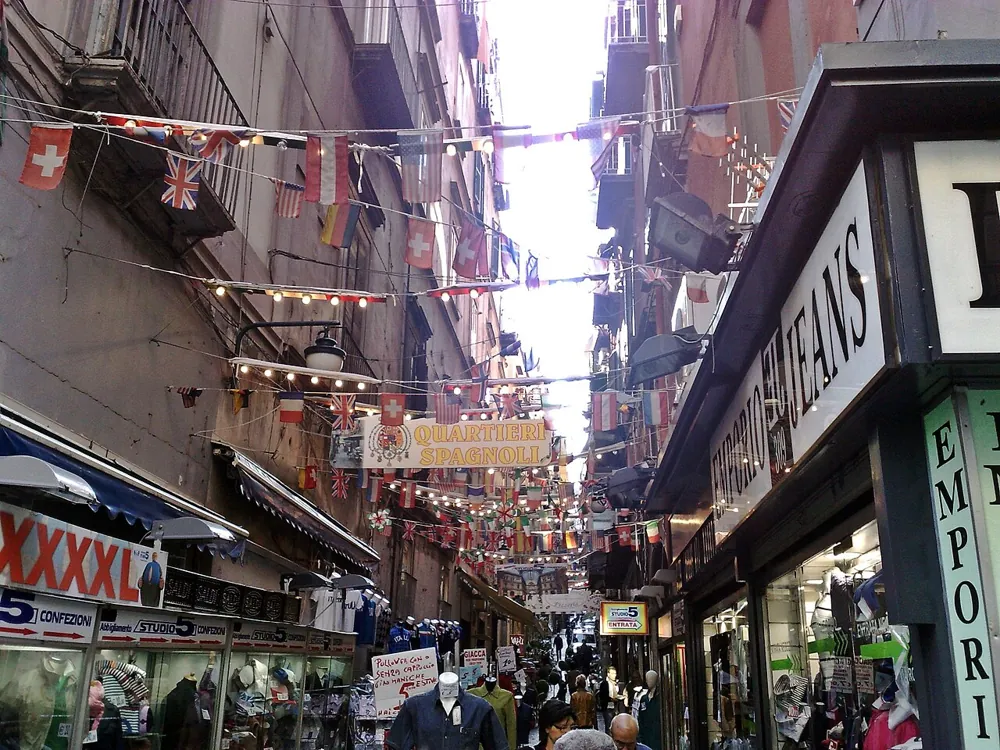
The historic centre, Chiaia, the Vomero hill and the main streets of the Quartieri Spagnoli are easy to walk at any hour, as crowded as any big city at the same tourist latitude. The scale changes once you leave the main streets for the smaller side alleys: the Quartieri Spagnoli remain one of the liveliest areas of the city by day, with laundry strung between balconies and the Maradona mural at Largo Maradona, but in the evening it is worth sticking to better lit streets with more people around and leaving the quieter alleys for the next morning, as the guide to the Quartieri Spagnoli also explains. The same logic applies to the Rione Sanità, where the San Gennaro catacombs are best visited in daylight, without a second thought.
Neighbourhoods that have nothing to do with a trip to Naples
Scampia, Secondigliano, Ponticelli, Barra: these are outlying districts with real social problems, but they have nothing to do with a tourist itinerary, not even in passing. There is no need to avoid them anxiously, they simply are not on the route of anyone visiting the city, and you do not end up there by accident.
The station and Piazza Garibaldi
The area around Napoli Centrale needs the most attention, because the steady flow of suitcases and tourists distracted by signage has made pickpocketing a known problem, especially on the square and on the streets right behind the station. Anyone arriving, leaving or looking for a place to stay nearby will find calmer streets toward corso Umberto or toward the Duomo, as the guide on where to stay in Naples also explains.
Taxis, cars and the most common tricks
At the airport and at the station, someone will sometimes offer a ride before you even reach the official taxi rank: that is the moment to say no and look for the white cars with a meter and the city council's logo. Once you are moving, ask for the fixed fare rather than leaving only the meter running: for the most common routes, like the one from the airport, it is set in advance and already includes the extras, as explained in the guide on getting around Naples. Anyone driving and parking on the street often meets an unofficial parking attendant asking for a few euros: it is not a courtesy to brush off without thinking, since the real risk is a broken mirror; in the trickier spots it is simply easier to choose a staffed car park.
Useful numbers (and one thing that changes on 9 December)
Until 9 December 2026, the usual numbers apply in Naples: 112 for the Carabinieri, 113 for the Polizia di Stato, 115 for the fire brigade, 118 for an ambulance. That day, the NUE, Europe's single emergency number 112, also goes live in the Naples telephone district (081), having already been active in the rest of the Campania region since 27 October: from that date, dialling 112 will be enough for any emergency, and the operator will route the call to the right service. To report a theft, the nearest Polizia di Stato or Carabinieri station is enough; for general tourist information, including lost documents, there is the IAT tourist office in piazza Municipio, inside Palazzo San Giacomo.
None of this calls for changing your plans: Naples is a city to walk through, by day and for most of the evening, with the same common sense you would use in any big, lively city. The things to do in Naples page remains the easiest starting point for planning your days, with guided experiences that help most exactly where it is useful to have a local alongside you.
Frequently asked questions
Is the Quartieri Spagnoli safe?
By day, yes, it is one of the liveliest parts of the city; in the evening it is worth sticking to the main streets near via Toledo and leaving the quieter alleys for the next day, as in any busy neighbourhood of Naples.
What is the most common risk for a tourist in Naples?
Pickpocketing in crowded places, not violence: wear your bag across your body, keep your phone and wallet out of easy-to-reach pockets, and stay a bit more alert on buses, on the metro and around the station.
Is it a city you can walk around alone, even in the evening?
Yes, the historic centre, Chiaia and the Vomero are easy to walk alone even late in the evening, with the same care you would use in any big city at night; a guided walk is still the easiest way to get to know an area like the Quartieri Spagnoli with a local.
What number do you call in an emergency?
Until 9 December 2026 it is still 112 for the Carabinieri, 113 for the police, 115 for the fire brigade and 118 for an ambulance; from that date, with the NUE live in Naples too, 112 alone covers any emergency.
Information checked on 19 November 2026.
Worth booking
Two experiences that go with this guide, picked among the best reviewed. Book online, usually with free cancellation up to 24 hours before.
Outdoor · 8.5 hours
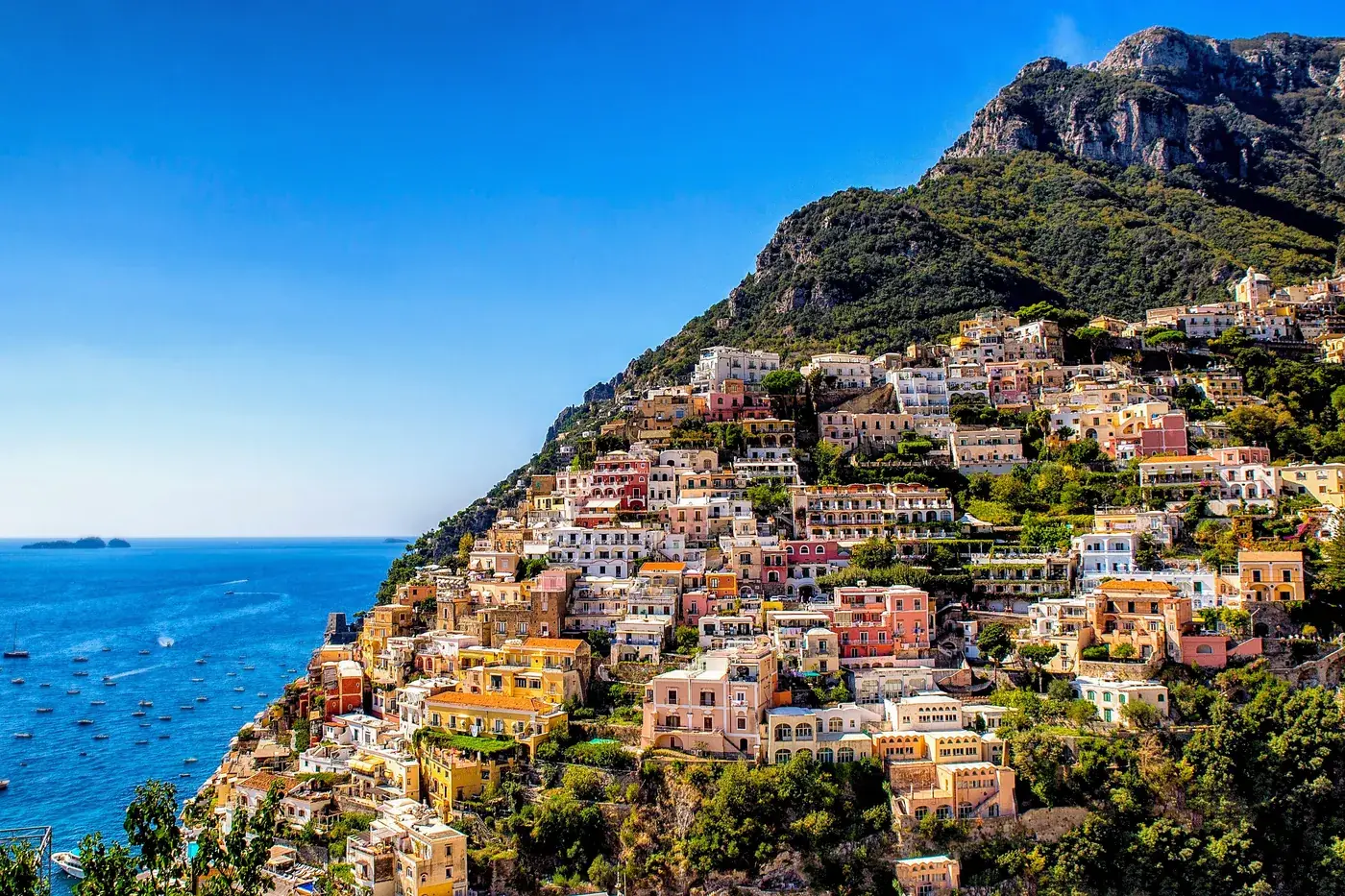
Amalfi Coast day trip from Naples: Sorrento, Positano, Amalfi
From your hotel
Return minibus + tour leader + panoramic stops

Outdoor · 3.5 to 8 hours
Vesuvius and Pompeii day trip from Naples, with pizza lunch
Piazza Garibaldi
Return coach + guide + Pompeii and Vesuvius tickets + pizza
For the rest of your stay: things to do in Naples today, this weekend and in the days ahead, checked every morning.
- is naples safe
- pickpocketing
- quartieri spagnoli
- useful numbers
- naples taxi
- travel tips

Who wrote this
Gianluca Scanni
Founder @ Cose Fighe