Forty metres below the streets lies another Naples: Greek tunnels from the 4th century BC, Roman aqueducts and WWII shelters. A vertical time trip.
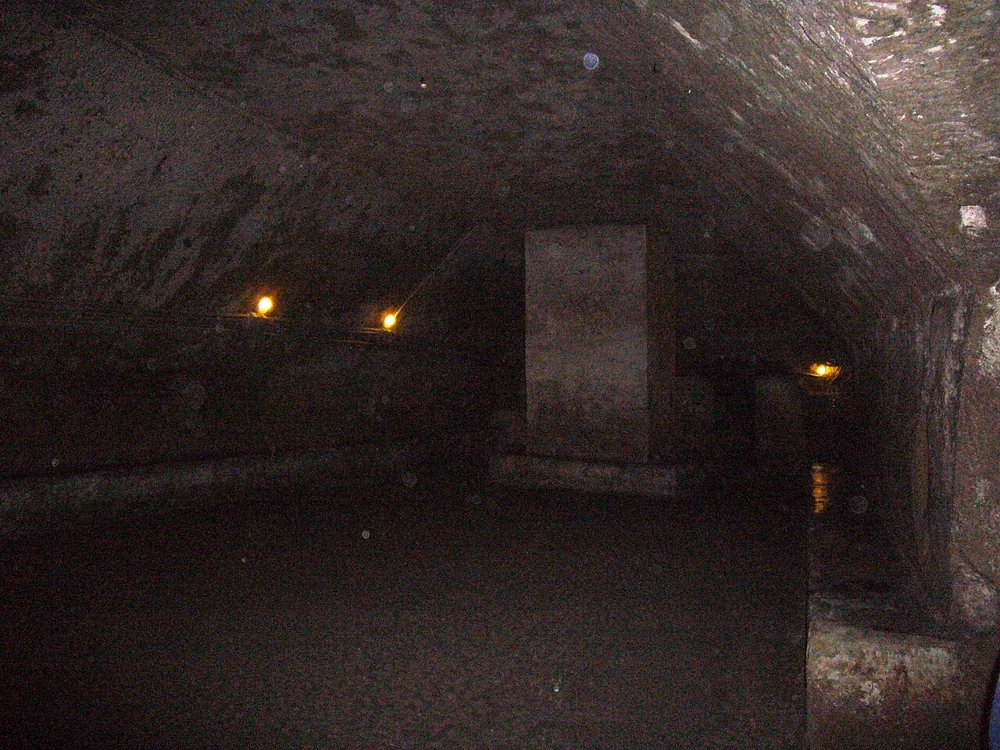
When you walk along Spaccanapoli or through piazza San Gaetano, you’re on streets built over thousands of years of history. Forty metres down there is quite literally another city: tunnels dug by the Greeks in the 4th century BC, enlarged by the Romans, used as aqueducts in the Middle Ages, turned into storage in the 1800s and finally used as air-raid shelters in the Second World War.
Greek origins: Neapolis and the tunnels
Naples began as a Greek colony, Neapolis, the new city, around 470 BC. The Greeks needed stone to build walls and roads. They started quarrying Neapolitan yellow tuff, a light but strong volcanic stone, creating underground galleries that over time became the backbone of the city’s water supply.
What you’ll find in the tunnels:
- Tuff quarry galleries from the 4th-3rd century BC
- Roman cisterns from the 1st-2nd century AD
- Medieval passages of the Graeco-Roman aqueduct
- Graffiti and writing left by people sheltering during the 1943 bombings
- A theatre room carved into the tuff, used by the shelterers for performances
The Roman era: the aqueduct
The Romans turned the Greek tunnels into a sophisticated water system serving the whole city. The Augustan aqueduct, built in the 1st century BC, carried water from the Serino springs to the underground cisterns of Naples. The system stayed in use until 1885, when a cholera epidemic pushed the authorities to build a new, modern aqueduct.
“Naples is a city in layers. You can’t understand the present unless you know everything underneath it, literally.”
The Second World War: air-raid shelters
Between 1940 and 1944 Naples was one of the most heavily bombed cities in Italy. The galleries became a refuge for civilians during air raids, with thousands of people at a time sheltering in the tuff cavities. They lived there for weeks: sleeping on wooden bunks, cooking on makeshift stoves, setting up small theatres and chapels.
How to visit Napoli Sotterranea
Practical information:
- Entrance: piazza San Gaetano 68, in the heart of Spaccanapoli
- Guided tour length: about 80 minutes
- Temperature in the tunnels: a constant 15°C (bring a jumper)
- Some passages are narrow: if you’re claustrophobic you can skip them
- Recommended minimum age: 6
Visiting Napoli Sotterranea is more than a tourist tour: it’s a way to understand what makes this city what it is. The resilience, the knack for adapting, the layers of culture. It all makes more sense when you walk where the Greeks walked 2,500 years ago.
- napoli sotterranea
- history
- art
- culture
- underground

Who wrote this
Gianluca Scanni
Founder @ Cose Fighe