Campi Flegrei in a day without a car: the Pozzuoli amphitheatre, Baia's castle and sunken villas, the Cave of the Sibyl at Cuma. Opening times and tickets.
The Campi Flegrei (Phlegraean Fields) are the part of Naples tourists skip: a volcano twelve kilometres wide with lakes, Roman baths, a Greek city older than Rome and a stretch of coast where emperors' villas lie underwater. From Montesanto it's half an hour by train. Below is a one-day route by public transport, covering what's open right now.
One thing before you go. On 31 July 2026 the area had its strongest earthquake in forty years. The Archaeological Park sites reopened after safety checks, and the Cumana railway has been running the full line again since 11 September. The Rione Terra in Pozzuoli, however, is closed, and rooms or routes can change from one week to the next: check the Info page on pafleg.cultura.gov.it the evening before and you're sorted.
Getting there and what to buy beforehand
The train is the Cumana, an EAV line from Montesanto to Torregaveta, running roughly every twenty minutes. The stops you need are Pozzuoli, Lucrino, Baia and Fusaro. Cuma has no station below the acropolis: from Fusaro it's a few kilometres by bus or taxi, and it's worth deciding which beforehand.
The ticket to get is the CircuitoFlegreo: €10, valid for three days, covering four sites: the Anfiteatro Flavio, the Museum in the Castle of Baia, the Baia Baths and Cuma. It's €5 for EU citizens aged 18 to 25, free under 18. Since April 2026 the ticket offices have been closed: you can only buy online, on the Musei Italiani website or app, booking a time slot. Entry is capped at 50 people every half hour, 25 at the amphitheatre.
Morning: Pozzuoli, the amphitheatre and the temple that rises and sinks
Get off at Pozzuoli and you've already started. The Anfiteatro Flavio is five minutes from the station, opens at 9am and is the third largest in Italy, after the Colosseum and the one at Capua. The highlight is underground: the corridors where the wild animals' cages stood and the lifts that hoisted them up into the arena. Access to the underground section often changes after tremors, so when you book, check what your time slot includes. You get thirty minutes, and that's enough.
Then head down towards the harbour, ten minutes on foot, and look over the Macellum, which everyone calls the Temple of Serapis. It was the market of Roman Puteoli. The three marble columns have a pitted band halfway up: holes bored by marine molluscs, proof that the ground here sank below sea level and then rose again. It's bradyseism (the slow rise and fall of the ground) explained without words. The site is closed, but you can see everything from the low wall on the square.
Lunch and early afternoon: Baia, the castle and the underwater villas
Two stops on the Cumana and you're in Baia, where wealthy Romans came for the baths and the parties. The Aragonese castle above the harbour houses the Archaeological Museum of the Campi Flegrei, open 9am-6.30pm with last entry at 5.30pm: inside is the Nymphaeum of Punta Epitaffio, rebuilt with the statues raised from the seabed, which explains what you're about to see in the water.
The Parco delle Terme di Baia (Baia Baths) is a kilometre uphill, open Tuesday to Sunday: terraces stepping down to the sea with pools, nymphaea, stucco work and the so-called Temple of Mercury, a round hall with a Roman concrete dome older than the Pantheon. Allow an hour and a half and wear shoes with decent soles.
The bit you won't find anywhere else is underwater. The villas and streets of Roman Baia lie a few metres down in front of the harbour, in the Parco Sommerso (Underwater Park): mosaics, columns, and statues put back where the originals stood. You can see it from a glass-bottomed boat, about an hour without getting wet, or with mask and fins. Snorkelling over the sunken Roman villas of Baia leaves from the harbour in groups of eight at most: two and a half hours with a guide and gear, €35. In September and early October the water is still good; you need a calm sea, otherwise you won't see much.
For lunch, between Baia harbour and Bacoli nearly every place does fish and nearly every place looks out over the water. A plate of fried fish or pasta with mussels, and a glass of Falanghina, the local white wine that calls this area home.
Afternoon: Cuma and the Cave of the Sibyl
Cuma (ancient Cumae) is the oldest Greek colony in the West, founded in the second half of the 8th century BC. The archaeological park sits on a tufa acropolis overlooking the sea, with the temples of Apollo and Jupiter. The Antro della Sibilla (Cave of the Sibyl) is a trapezoidal gallery cut into the tufa, more than a hundred metres long, with openings that slice the light into strips. Whether Virgil's prophetess really lived there is another matter, but once you're inside you stop wondering. Access is limited to 25 people at a time, visits last two hours at most, and it's closed on Tuesdays.
If you'd rather stay close to the railway, the alternative is the Piscina Mirabilis in Bacoli: the cistern of the Roman fleet at Misenum, an underground hall of pillared aisles that looks like a cathedral. It opens on Wednesdays, Saturdays and Sundays, visits are accompanied and start every half hour, it costs €5 and booking is compulsory.
Sunset: Lake Averno or Capo Miseno
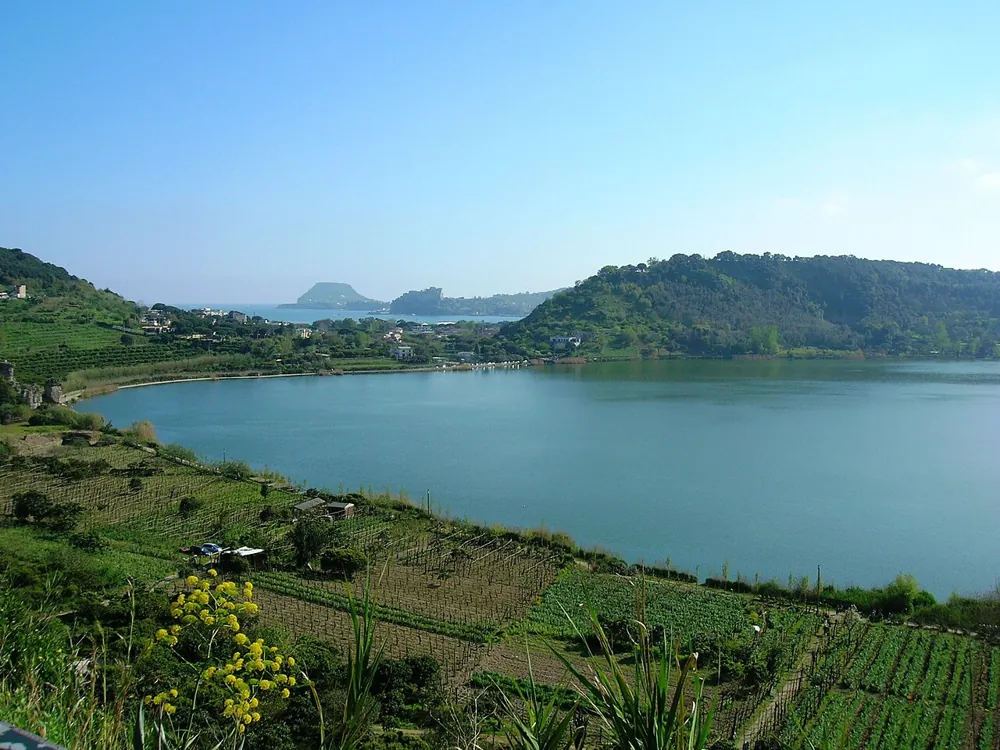
To finish you have two options, both free. The first is Lake Averno, a crater full of water that the Romans considered the gateway to the underworld: it's where Virgil sends Aeneas down. From Lucrino station it's a quarter of an hour on foot, and the loop round the lake is a flat walk of just over an hour among vineyards and reed beds. At sunset it's the quietest place in the Campi Flegrei.
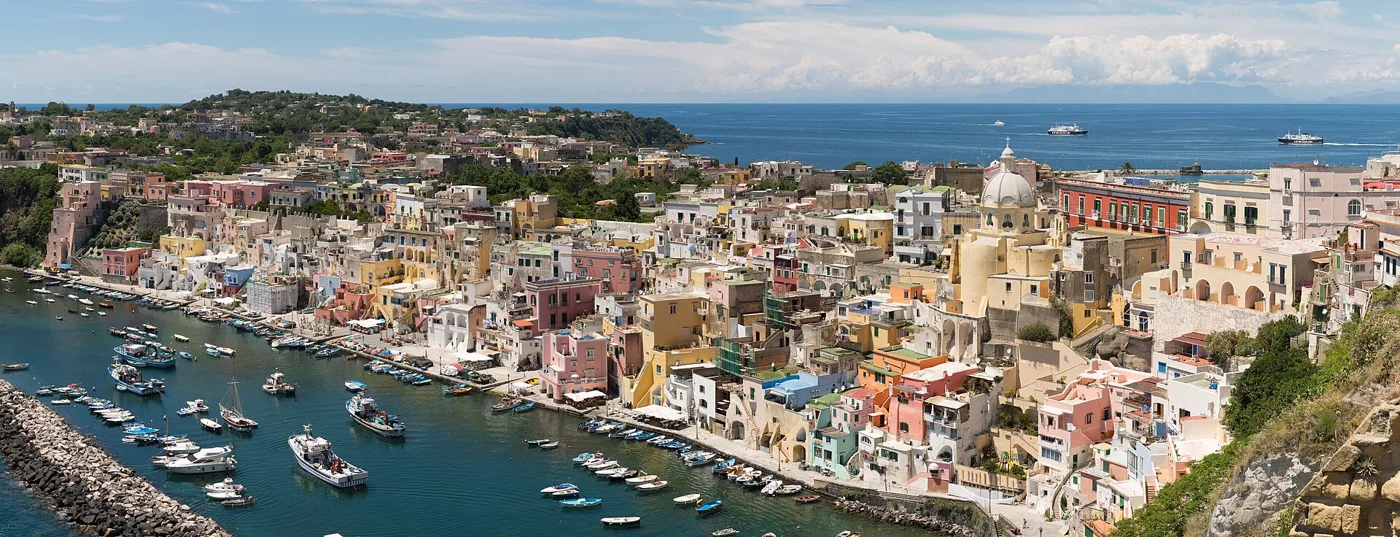
The second is Capo Miseno, at the tip of the peninsula: the beaches of Miseno and Miliscola face Procida, a stone's throw away, and at the end of September you can still swim if it's sunny. From Baia it's a few kilometres by bus or taxi; to get back to Naples, pick up the Cumana at Torregaveta, the end of the line, or at Fusaro.
If the sea calls louder than history
The Campi Flegrei are the right trip if you've already done Pompeii and want somewhere Neapolitans actually go. If one of your three days in Naples is still free, this is the answer. If Baia has left you wanting nothing but water, from the centre there's a boat out to snorkelling in the Roman grottoes of Posillipo with a marine biologist, and from Procida a boat day around Ischia and Procida with lunch on board.
Other day trips and boat outings are in the Outdoor section. And before you pick your day, check what's on in Naples that week: the Campi Flegrei often have an evening opening or a concert among the ruins.
- campi flegrei
- pozzuoli
- baia
- cuma
- cumana railway
- day trips from naples

Who wrote this
Gianluca Scanni
Founder @ Cose Fighe