What to see in Naples in 3 days: two days in the city on foot and by funicular, one out of town to Pompeii, Capri or the coast. Plus what to book.
Three days is the right amount of Naples. With one day you rush; with a week you start living here. Three days let you take things slowly: two for the city, one to get out. The bay is worth as much as Naples itself, and going home without seeing Pompeii, an island or the Amalfi Coast would be a shame.
You don’t need a car; in fact you’re better off without one. The old centre is walkable, you ride a funicular (a cable railway up the hill) to the Vomero, and the metro does the rest. Below you’ll find what to see in Naples in 3 days, day by day, then where to stay, how to get around and what’s worth booking before you leave.
Day 1: the old centre and underground
The first day fits into a single square kilometre: churches, cloisters, workshops, alleys, and under your feet the Greek and Roman city. Comfortable shoes, and no minute-by-minute schedule.
Morning: Spaccanapoli, Santa Chiara and the Veiled Christ
Start at Piazza del Gesù. Round the corner is the majolica-tiled cloister of Santa Chiara, the quietest spot of the day: best seen early. Then head into Spaccanapoli, the dead-straight street that cuts the old centre in two and, seen from the Vomero, looks like a crack in the city. Walk it without a map, past San Domenico Maggiore; getting lost is part of the game.
The Cappella Sansevero is right next door. Inside is the Cristo Velato (Veiled Christ), carved by Giuseppe Sanmartino in 1753: a marble Christ under a veil that looks like real fabric. You walk around the statue in silence, then go down to the anatomical machines, two skeletons with their circulatory systems on display. The chapel is small and always full, and you need your ticket in advance: without a booking the queue can eat half your day. End the morning on San Gregorio Armeno, the street of nativity-scene workshops, with the Duomo (the cathedral) a few steps away.
Lunch: pizza
By lunchtime you’re between Via dei Tribunali and Via Duomo, which is exactly the right place. The pizzerias in the centre almost always have a queue outside. Two options: sit down early, or get a pizza a portafoglio, a “wallet pizza” folded into quarters in paper, to eat as you walk. Skip the starters: Neapolitan pizza is big and the afternoon is long.
Afternoon: the MANN or underground
Here you have to choose, because both won’t fit. Option one is the National Archaeological Museum, the MANN: the mosaics from the House of the Faun, the bronzes from the Villa of the Papyri, the Farnese Bull and the Farnese Hercules, the Secret Cabinet. If you’re going to Pompeii or Herculaneum on day three, this is the afternoon for it, because the best of what came out of the excavations is here. The museum is huge, and on your own you leave exhausted.
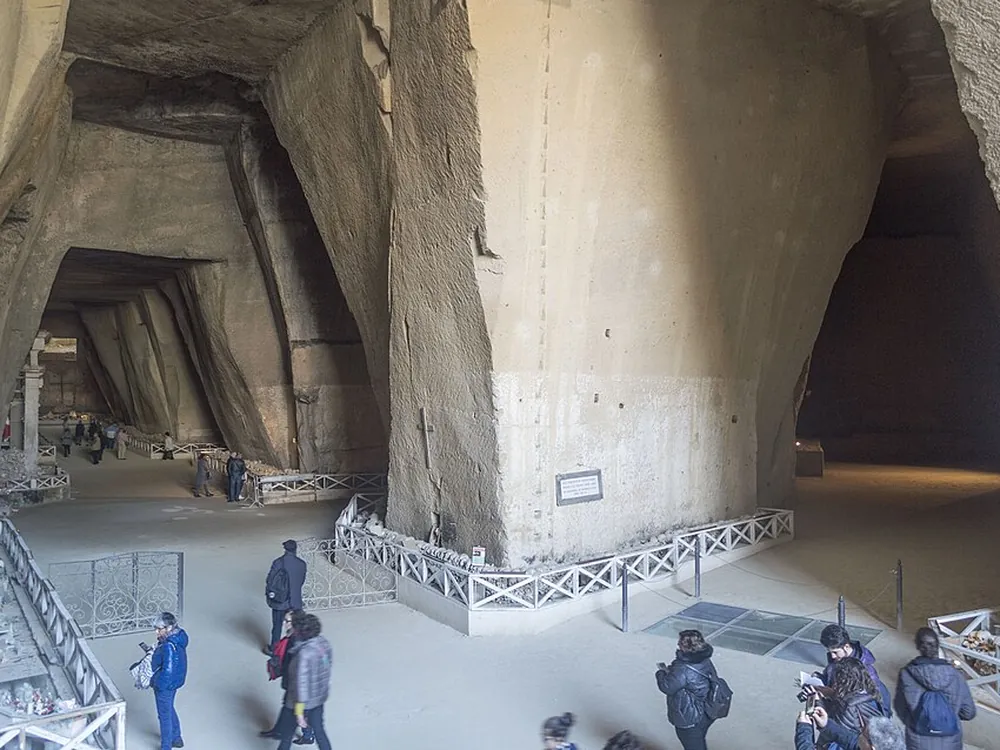
Option two is Naples below ground: cisterns, tunnels and air-raid shelters dug into the tuff, the soft volcanic stone the city stands on. In the old centre you go down into the Greek and Roman city; under the Quartieri Spagnoli (the Spanish Quarter) you reach forty metres deep. The most unusual is the Galleria Borbonica, under Chiaia. Ferdinand II had it dug in 1853 to link the Royal Palace to the barracks in case of revolt. Never finished, it became a shelter during the bombings and later a police impound: the seized vintage cars and motorbikes are still there, covered in dust.
Evening: Piazza Bellini
A tree-lined square on top of Greek walls from the 4th century BC, which you can see in the open among the café tables. Students, bookshops, live music. It’s where Neapolitans have a drink before dinner, two minutes from Via dei Tribunali. For food, the polpette (meatballs) and pizza fritta (fried pizza) in the surrounding alleys are the best part.
Day 2: the upper city, the sea and the Sanità
Naples is a vertical city, and day two is for understanding that. The classic version is the Vomero in the morning and the sea in the afternoon. If you prefer neighbourhoods to views, the alternative is further down.
Morning: the Vomero, the Certosa di San Martino and Castel Sant’Elmo
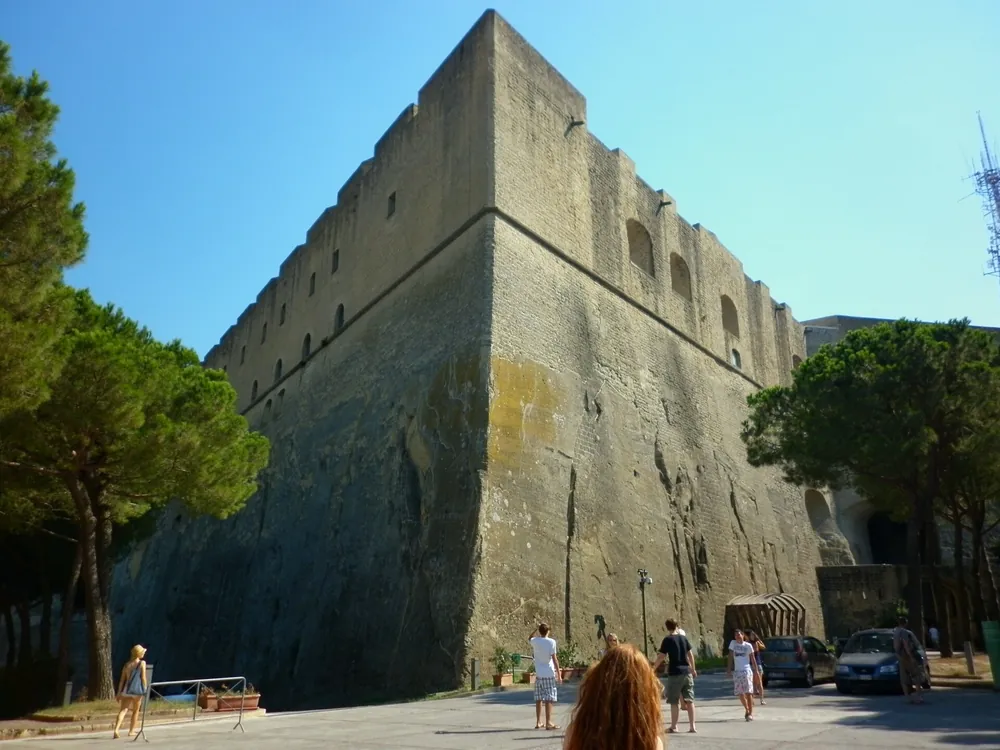
Take the funicular up from Montesanto. San Martino is the highest point of the Vomero, where you see the whole city: the old centre with Spaccanapoli, the port, Vesuvius, and Capri on clear days. The Certosa, a former monastery, has the great cloister with marble skulls on the balustrade, the Baroque church and the collection of nativity scenes. Next door is Castel Sant’Elmo, a six-pointed star with an open terrace. If your legs are up to it, walk up or down the Pedamentina: 414 steps.
Afternoon: Chiaia, the seafront and Castel dell’Ovo
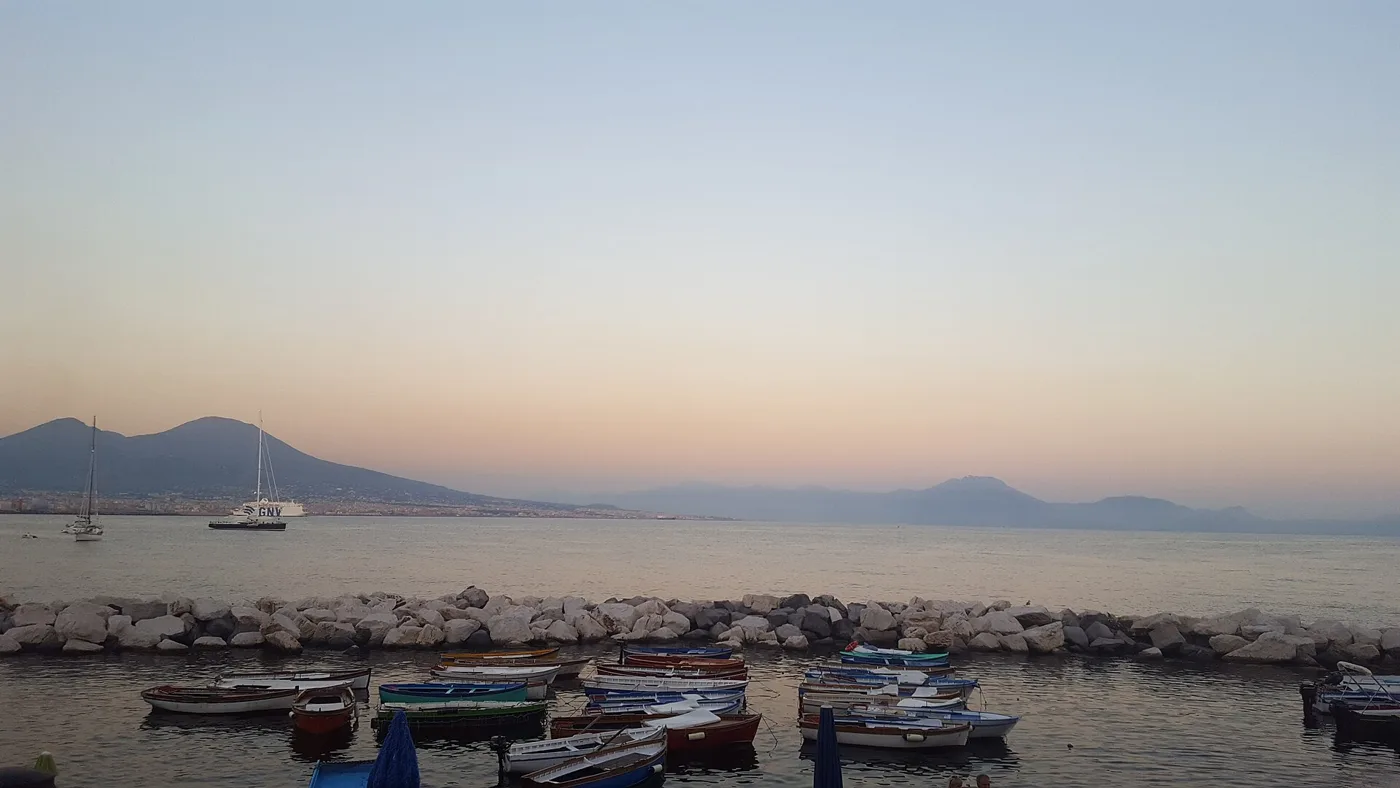
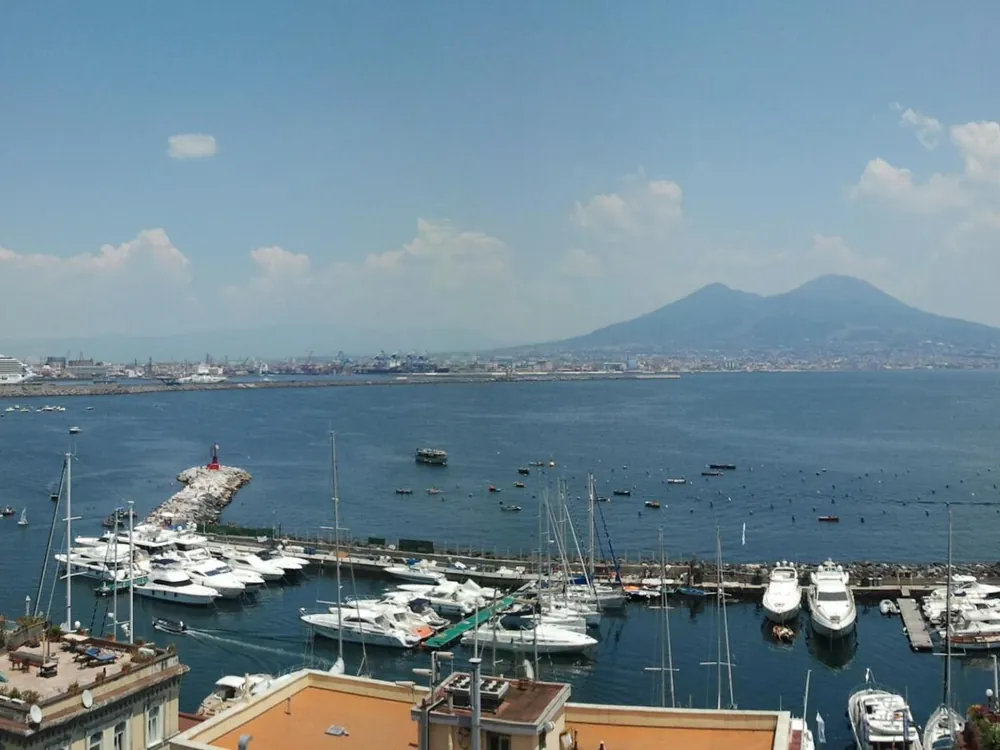
From the Vomero you go down to Chiaia by funicular, or on foot via the Petraio, the stairway that winds between Art Nouveau villas, vegetable gardens and glimpses of the bay you can’t see from the road. From Chiaia it’s a few minutes to the Lungomare Caracciolo, the seafront promenade, pedestrianised and flat all the way to Mergellina. At the end is Castel dell’Ovo, with the little harbour of Borgo Marinari at its feet. A bit further on is Piazza del Plebiscito: the colonnade of San Francesco di Paola on one side, the façade of the Palazzo Reale (the Royal Palace) on the other. You can cross it for free at any hour.
The alternative: Rione Sanità, the catacombs and the Fontanelle
The Sanità is the neighbourhood under the bridge that for decades Neapolitans themselves avoided. Start at the Catacombs of San Gennaro: two levels of galleries dug into the tuff from the 2nd century, with early Christian frescoes and the first tomb of the city’s patron saint. They’re run by a cooperative of young people from the neighbourhood, and it changed the area’s story. Then walk past Baroque palazzi to the Cimitero delle Fontanelle, a tuff quarry holding tens of thousands of skulls. For a century Neapolitans “adopted” a skull, one of the anime pezzentelle (the poor forsaken souls), asking for favours in return. It isn’t a macabre place: it’s quiet and cool.
Evening: Neapolitan song or a boat at sunset
Two evenings that beat the usual restaurant. The first is a concert of canzone napoletana, Neapolitan song, the way it used to be done: fifty-seat rooms in the centre, bare voices and mandolins, no amplification. The second, from May to October, is the bay from the water: small boats run along Posillipo at sunset, with seafront villas ahead and Vesuvius behind. If you’d rather not book anything, the seafront from Castel dell’Ovo to Mergellina is more than enough.
Day 3: out of town
On day three you leave the city, and there’s one rule: one trip only. Try to squeeze Pompeii and Capri into the same day and you’ll see neither. Here are the options, with their pros and cons.
Pompeii, in half a day
The obvious choice, and rightly so. But the site is big, shade is scarce and the streets are stone: on your own you walk a lot and understand little. It suits people who want to see the ruins and keep half a day for Naples. The Pompeii tour with an archaeologist guide, ticket and coach from Naples lasts three and a half hours. If you want a whole day there on your own, take the Circumvesuviana, the local train that runs round Vesuvius.
Pompeii and Vesuvius, in one day
First the crater, then the city it buried. A coach takes you up to 1,000 metres, then there’s an uphill gravel path; at the top, the bay from Sorrento to Ischia. It suits people who want to do both without changing transport three times, and families with older kids. Two things to know about Vesuvius and Pompeii in one day, with pizza on the slopes: the guide speaks English or Spanish, and in rain or strong wind the crater may be closed.
Herculaneum: smaller and more intact
Pompeii is more famous, Herculaneum is better preserved: the volcanic mud saved the upper floors of the houses, the charred furniture, the beams, the doors. You can see it in two hours, and it’s twenty minutes from Naples on the Circumvesuviana. It suits people who don’t like crowds and want the afternoon free. With Herculaneum with an archaeologist, ticket included, €35, the rooms become the homes of people with names.
Capri
Fifty minutes by hydrofoil. The island is as beautiful as they say, but it’s all slopes and steps, and in high season it’s crowded. It suits people who have always wanted to see it and can live with the crowds. The day on Capri and Anacapri by hydrofoil, with the Gardens of Augustus lasts eight hours, with the hydrofoil already booked, a minibus up to Anacapri and a guide. The Blue Grotto and Monte Solaro aren’t included.
Amalfi Coast
Let’s be honest: the Amalfi Coast deserves a trip of its own. On a day trip from Naples you get a taste, with plenty of hours of road and hairpin bends. It suits people who won’t be back this way soon and want to see the three towns without driving or hunting for parking. The Sorrento, Positano and Amalfi by minibus, with photo stops tour gets back in the evening. If you get carsick, think twice.
Ischia and Procida
This isn’t a cultural outing, it’s a day at sea. It works in summer, for anyone who after two days of churches and museums just wants water; not for anyone prone to seasickness. With Ischia and Procida by boat, with swims and lunch on board you take the hydrofoil from Molo Beverello, board a boat at Procida and sail along Ischia without landing. Seven hours in all.
Royal Palace of Caserta
The only trip that doesn’t look at the sea. The Reggia, the royal palace commissioned by Charles of Bourbon in 1750 and designed by Luigi Vanvitelli: 1,200 rooms and a park with three kilometres of avenues. A good pick when the weather is uncertain, and for anyone who loves palaces and gardens. You get there by train, and the palace is opposite Caserta station. The Royal Palace of Caserta in three hours, with the grand staircase, the apartments and the park shuttle starts at the entrance: getting there is up to you.
Where to stay to get around easily
With three days, the area matters more than the room. The four that make sense:
- Old centre: you do day one on foot and have Piazza Bellini on your doorstep in the evening. The trade-off is noise until late, scooters in the alleys and old buildings that don’t always have a lift.
- Chiaia and the seafront: the most elegant area and the quietest at night, close to the sea and the hydrofoils. It costs more, and the old centre is half an hour’s walk away.
- Vomero: residential and orderly, with San Martino within strolling distance. You come down by funicular and metro, but in the evening you depend on public transport.
- Station area: the handiest for the Circumvesuviana, trains, the metro and day-trip coaches, and usually the cheapest. It’s chaotic and not very pleasant at night. Fine if you want to spend little and leave early.
Getting around
Metro Line 1 is the one you need. It links the central station at Piazza Garibaldi with Università, Municipio, Toledo, Dante, Museo and Vanvitelli, up on the Vomero: practically every stop of the first two days. There are four funiculars. Three go up to the Vomero: the Centrale from Via Toledo, the Chiaia line, and the Montesanto line, the handiest for San Martino. The fourth climbs from Mergellina towards Posillipo.
For Pompeii and Herculaneum there’s the Circumvesuviana, on the Sorrento line. It leaves from Porta Nolana and stops at Piazza Garibaldi, under the central station. The stops you want are Ercolano Scavi and Pompei Scavi-Villa dei Misteri. The trains are basic and packed in high season: better to set off early. Hydrofoils to Capri, Ischia and Procida leave from Molo Beverello, opposite the Maschio Angioino castle, at the Municipio metro stop.
What to book before you go
Most of this itinerary needs no booking. A few things, though, left to the last minute, sell out or cost you a queue. Almost all our experiences can be cancelled free of charge up to 24 hours before, so booking them from home doesn’t tie your hands.
In order of urgency:
- The Veiled Christ, above all. On your own, with a ticket bought in advance, or with the Veiled Christ and Sansevero Chapel guided tour: 45 minutes with a licensed guide and ticket included, €15.
- The day-three trip. In high season Capri and the Amalfi Coast fill up first.
- The MANN with an archaeologist: two hours, priority entry, €44. Money well spent, especially before Pompeii.
- The Galleria Borbonica: cisterns, shelters and vintage cars: one hour, €15. You can only go in on a guided tour.
- An hour of Neapolitan song, no microphones: €20 with a drink. Seats are few.
If you have two days, or four
With two days, keep day one as it is. Day two becomes a compromise: Pompeii or Herculaneum in the morning, San Martino and the seafront in the afternoon. The Sanità and the islands drop out, and so be it. If you only have one day, that’s a different itinerary and we’ve written it separately: Naples in one day, hour by hour.
With four days, don’t add a second trip: add more Naples. A morning in the Quartieri Spagnoli and the Pignasecca, the city’s oldest street market. Then Capodimonte, with the Farnese collection, Caravaggio’s Flagellation, painted in Naples in 1607, and the Real Bosco, the royal park, all around. Or catch up on what you left out: the Sanità if you chose the sea, the MANN if you went underground.
One last thing. Naples changes every week: neighbourhood festivals, concerts, exhibitions, special openings. Before you leave, check what’s on in Naples on your dates: we update the listings every morning.
- naples in 3 days
- what to see in naples in 3 days
- itinerary
- old town
- pompeii
- capri
- amalfi coast

Who wrote this
Gianluca Scanni
Founder @ Cose Fighe