Naples in one day: the old centre, pizza, the MANN or the underground, the Vomero and the seafront. An hour-by-hour plan and what to book first.
You can do Naples in one day, as long as you accept one thing: a day is enough to understand the city, not to see it. The old centre alone would need a week, and then there are the hills, the sea, the museums and everything that lies underground. Try to cram it all into twelve hours and you'll spend the day in taxis and see nothing.
The rule that works is simple: one area per time slot, and you get around on foot or by funicular. Morning in the old centre, pizza for lunch, afternoon in a museum or underground, late afternoon up on the Vomero hill, evening on the seafront. Distances are short, the climbs aren't: comfortable shoes and a light backpack. Below you'll find the hour-by-hour itinerary, then how to get around and what's worth booking before you go.
9am: breakfast with a sfogliatella, then the old centre
Start at Piazza del Gesù, with the diamond-point facade of the Gesù Nuovo church on one side and the spire of the Immacolata in the middle. Breakfast first, though: a warm sfogliatella, the ricotta-filled pastry, either riccia (crisp and flaky) or frolla (soft shortcrust), and a coffee standing at the bar, in a scalding cup. In Naples it often comes already sweetened, so ask for it amaro if you don't take sugar. Ten minutes and you're ready.
From the square, step into the cloister of Santa Chiara, where the pillars and benches are covered in 18th-century majolica tiles: it's the quietest spot of the whole morning. Then Spaccanapoli, the dead-straight street that splits the old centre in two and looks like a crack in the city when you see it from the Vomero. You walk it without a map, past San Domenico Maggiore, the workshops and the doorways open onto courtyards. Getting lost is part of the fun, but on a tight schedule keep your bearings: from Piazza del Gesù towards the Duomo, the cathedral.
The Cappella Sansevero is a stone's throw from San Domenico Maggiore. Inside is the Veiled Christ (Cristo Velato), carved by Giuseppe Sanmartino in 1753: a marble Christ under a veil that looks like fabric. You walk round the statue in silence, then go downstairs to see the anatomical machines, two skeletons with their circulatory systems on display. The chapel is small and crowded, and you need to buy your ticket in advance: without a booking the queue can eat your whole morning. If you'd also like someone to explain what you're looking at, there's a 45-minute guided visit with the ticket included, €15.
Last stop of the morning: San Gregorio Armeno, the street of nativity scenes (presepi), where the workshops keep going all year and the figurines hang outside. From there you're on via dei Tribunali and, if you have time, the Duomo with the Chapel of the Treasure of San Gennaro is five minutes' walk away.
1pm: pizza
At one o'clock you're between via dei Tribunali and via Duomo, which is exactly the right place. The pizzerias in the centre have a queue outside at any hour, and with only one day the queue is your enemy. Two ways round it: book a table in the morning for 1pm sharp, or get a pizza a portafoglio, folded in four and wrapped in paper, to eat as you walk. It costs a few euros and you're done in ten minutes. The margherita is the test of the oven; the marinara, with no mozzarella, the test of the dough. Skip the starters: Neapolitan pizza is big and the afternoon is long.
2.30pm: the MANN or underground
Here you have to choose, because you can't fit in both. Option one is the National Archaeological Museum, the MANN, ten minutes' walk from Piazza Bellini. Inside is the best of what the digs at Pompeii and Herculaneum have given back: the mosaics from the House of the Faun, the frescoes, the bronzes from the Villa of the Papyri, the Farnese Bull and the Farnese Hercules, the Secret Cabinet. It's a huge museum, and without a guide you come out tired, feeling you've missed the rooms that mattered. Two hours with an archaeologist is enough to leave with a clear picture.
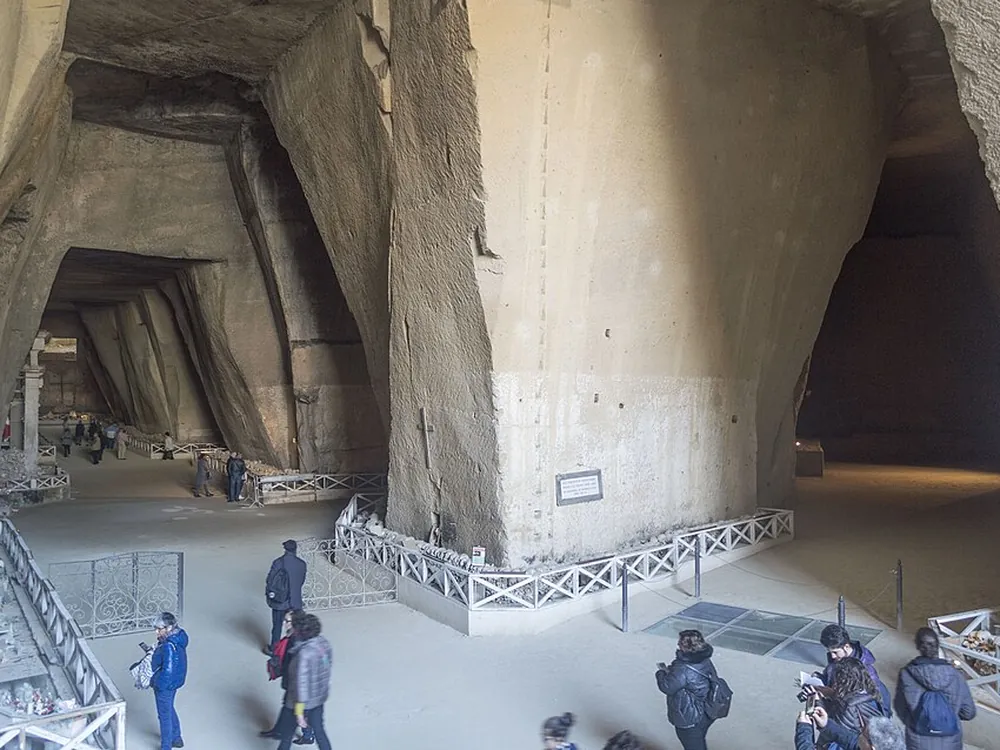
Option two is going underground. Naples is dug into tuff, the soft volcanic stone, and beneath its streets lie cisterns, aqueducts and air-raid shelters. The Galleria Borbonica, under Chiaia, was dug on the orders of Ferdinand II in 1853 to link the Royal Palace to the barracks in case of revolt. It was never finished: in the 20th century it became an air-raid shelter, then a judicial impound, and the confiscated vintage cars and motorbikes are still down there today, covered in dust, next to the graffiti Neapolitans left during the bombing raids. You can only go in on a guided tour: an hour in the Galleria Borbonica costs €15. The alternative in the old centre is Napoli Sotterranea, with its entrance on via dei Tribunali and the aqueduct cisterns forty metres down.
How to choose: if you want to understand Pompeii without going there, the MANN. If it's hot, raining or you have children with you, underground. Either way, by 4.30pm you're out and a few minutes from a funicular.
5pm: up high
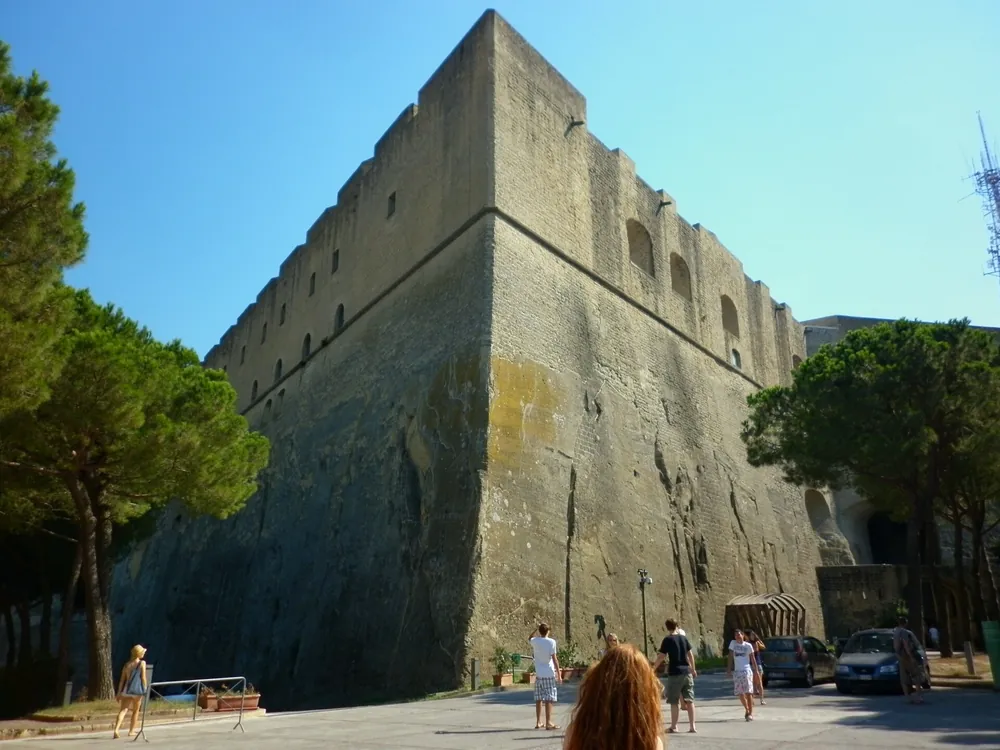
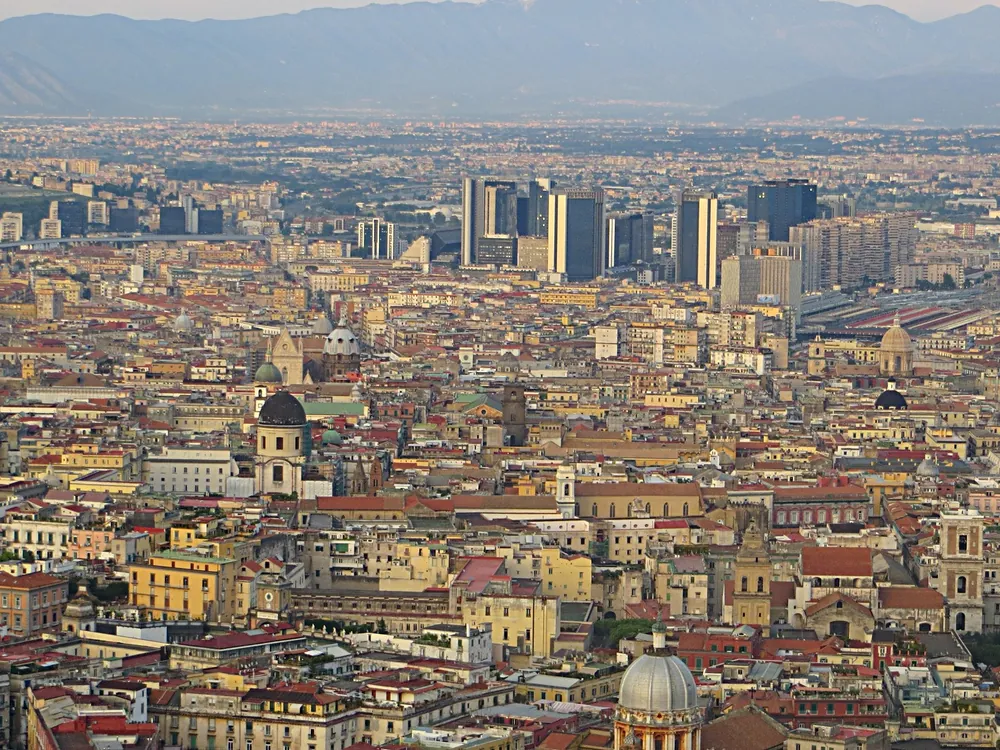
From the old centre you ride up to the Vomero on the Montesanto funicular; from Chiaia on the Chiaia one, from via Toledo on the Centrale. A few minutes and you're above the city without breaking a sweat. The highest point is Largo San Martino, home to the Certosa, the former Carthusian monastery, and Castel Sant'Elmo, a six-pointed star with an open terrace: from up there you see the whole city, the old centre with the crack of Spaccanapoli, the port, Vesuvius, and Capri on clear days.
The Certosa di San Martino has the great cloister with marble skulls on the balustrade, the Baroque church and the collection of nativity scenes, including the Cuciniello, the most famous of them. If you only have time for one thing, pick the castle. The San Martino belvedere, the terrace in front of the Certosa, is free and the right place for the six o'clock light.
To come down, the Neapolitan choice is the Pedamentina: 414 steps from the Certosa to corso Vittorio Emanuele, past vegetable gardens and glimpses of the bay you can't see from the road. From there it's half an hour's walk to the seafront, downhill all the way.
7.30pm: the seafront and Castel dell'Ovo
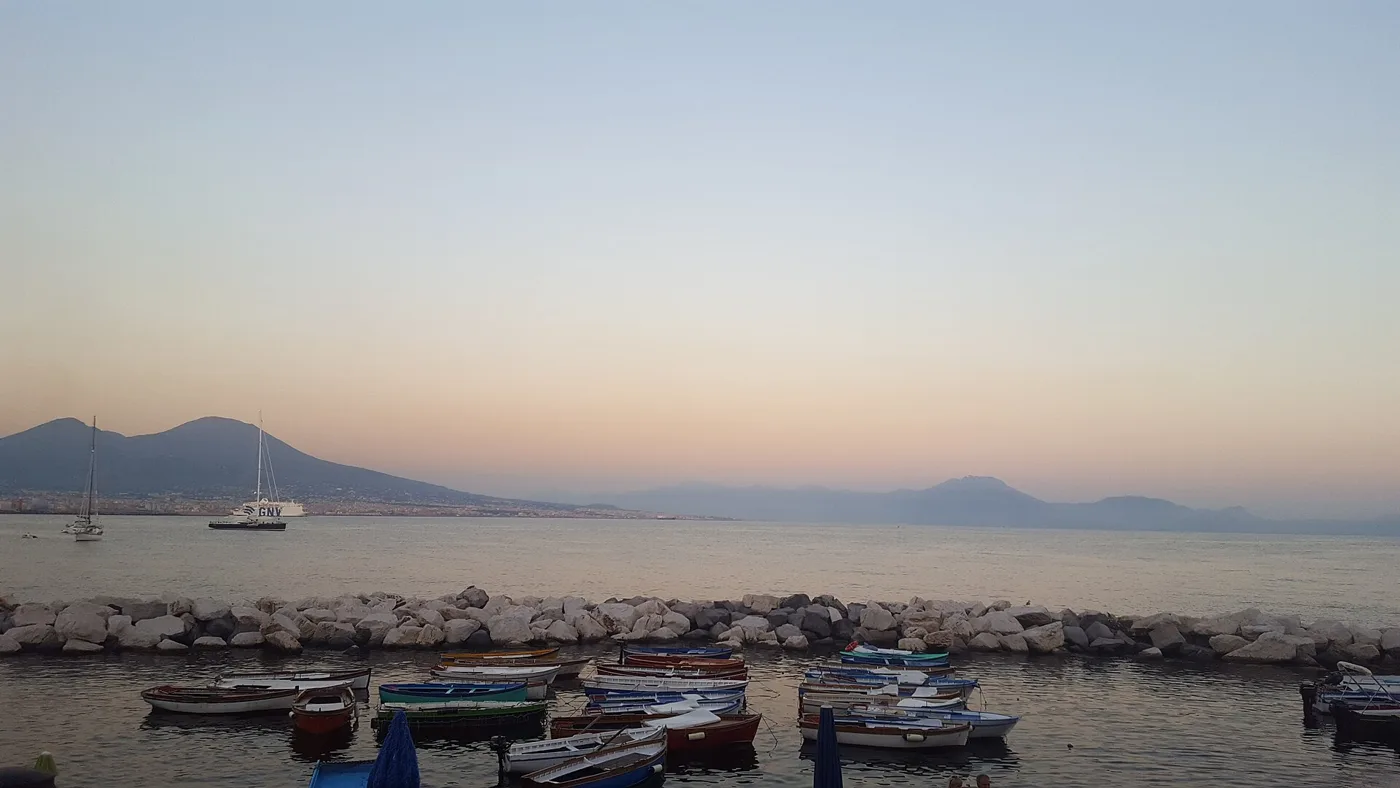
The lungomare, the seafront promenade from via Partenope to Mergellina, is traffic-free and flat, and at this hour it's full of Neapolitans strolling, jogging or sitting on the rocks. Castel dell'Ovo stands on a small island joined to the mainland, with the Borgo Marinari below it, a little harbour of boats and café tables. You can walk round the borgo in ten minutes and it's the right spot for sunset, with Vesuvius across the bay and Posillipo lighting up behind you.
For dinner you have three options: the trattorias of Santa Lucia and Chiaia, a short walk from the castle; a second pizza, which in Naples is no sin; or push dinner back to 9pm in the old centre, where the evening ends up anyway.
9pm: the evening
Two possible evenings, in opposite parts of town. Piazza Bellini sits on Greek walls from the 4th century BC, open to the sky among the café tables: students, bookshops, live music. It's where Neapolitans go for a drink, two minutes from via dei Tribunali, and in the lanes around it you'll find polpette (meatballs) and pizza fritta (fried pizza), which are the best part. Or Chiaia, the lanes between via dei Mille and Piazza dei Martiri, with tables outside and a smarter crowd. If you'd like something organised, the centre has concerts of Neapolitan song in fifty-seat rooms, an hour long after dinner and with no amplification: more on that below.
If you have a day and a half
With an extra half day, the next morning you either leave the city or head out on the water. The first option is Herculaneum (Ercolano): twenty minutes from Naples on the Circumvesuviana, the local railway that loops round Vesuvius. It's a small site you can cover in two hours, and more intact than Pompeii, because the volcanic mud preserved the upper floors of the houses, the charred furniture, the wooden beams, the doors. With an archaeologist the rooms turn into the homes of people with names: the two-hour visit with ticket included costs €35. You're back in Naples for lunch.
The second option is seeing the bay from the sea. You leave from the port or the Borgo Marinari and follow the Posillipo coast: the villas, Palazzo Donn'Anna with its foundations in the water, the caves, the Gaiola, and behind you Vesuvius and the whole city. From May to October the small nine-seat boats stop for a swim; the rest of the year it's the classic 75-minute trip. It's the quickest way to understand the shape of the city.
Getting around
No car. The old centre is largely closed to traffic, parking is a job in itself and the traffic eats your hours. The whole itinerary works with three ways of getting around, and a single city ticket covers the metro, funiculars and buses.
In order of how much you'll use them:
- On foot: from the old centre to the Museum, from via Toledo to Piazza del Plebiscito, from the Vomero down to the seafront. Distances are short, but the paving is basalt and the lanes climb: comfortable shoes, not new ones.
- Metro Line 1: links Garibaldi station to the centre (Duomo, Università, Municipio, Toledo, Dante, Museo) and climbs to the Vomero, at the Vanvitelli stop. The Art Stations, Toledo above all, are worth a stop even if you're not going anywhere.
- Funiculars: Montesanto, Centrale (from via Toledo) and Chiaia climb to the Vomero in a few minutes; the Mergellina line goes up to Posillipo.
- Taxis: only for the airport or to get back to your hotel late at night. Ask for the fixed fare (tariffa predeterminata) before you set off.
What to book in advance
Four things, all bookable on our site, that fix the points where a single day gets wasted. The first is the Cappella Sansevero: the Veiled Christ guided tour with the ticket included, 45 minutes, €15, from Piazza San Domenico Maggiore. It gets you past the queue that can eat the whole 9am section.
The second is the MANN with an archaeologist, two hours with priority entry, €44: the Farnese collection, Pompeii and Herculaneum in the right order. It's the best money you'll spend all day.
The third is the bay in 75 minutes, €25 from the port, with live commentary and a covered deck: Vesuvius, Castel dell'Ovo, Posillipo and Nisida. It runs all year round, and if you have a day and a half it's your second morning.
The fourth is the evening: an hour of Neapolitan song without microphones, €20 with a drink, in the Galleria Principe di Napoli, a short walk from the Museum. Bare voices and mandolins, the singers a metre away, and the stories behind each song told in between. It costs about as much as a pizza, and book ahead, because seats are few.
Everything else, from the day's events to exhibitions, concerts and markets, is updated every morning on the things to do in Naples page. If your day falls on a Saturday or Sunday, check the listings: there may be a neighbourhood festival or a special opening worth a detour.
- naples in one day
- itinerary
- old town
- what to see in naples
- vomero
- seafront

Who wrote this
Gianluca Scanni
Founder @ Cose Fighe