Things to see in Naples, Italy: 20 places from the Veiled Christ to Capodimonte, with hours, tickets, closing days, the nearest metro stop and the best time to go.
Naples is a city you see on foot and by metro, and it makes more sense once you split it in three. The old town, Greek and Roman underneath, cut in two by Spaccanapoli and packed with churches, workshops and tunnels. Then the city of the kings, between via Toledo, piazza del Plebiscito and the sea: palaces, the opera house, castles and the waterfront. Finally the hills and the Sanità district, home to the big museums and the catacombs. Metro Line 1 ties it all together, from Garibaldi station to the Vomero hill.
This guide is about places. For each one you get opening hours, ticket price, closing day, how long it takes, how to get there and a tip on when to go. Activities, from pizza to boats, live on the things to do in Naples page. The information comes from the official websites and was checked on 4 October 2026; where an official site was down, I say so in the chapter. One rule applies to every state museum: entry is free on the first Sunday of the month (the next ones are 1 November and 6 December 2026), tickets cost 2 euros for 18 to 25 year olds and are free under 18.
Contents
- The old town: Spaccanapoli, Sansevero, Santa Chiara, San Gregorio Armeno, the Cathedral, Pio Monte, Napoli Sotterranea, San Lorenzo
- Toledo, Plebiscito and the sea: Galleria Umberto, Royal Palace, San Carlo, Castel Nuovo, Castel dell’Ovo
- The big museums: MANN, Capodimonte, San Martino, Sant’Elmo
- The Sanità: Catacombs of San Gennaro, Fontanelle
- The art metro
- Day trips: Pompeii, Herculaneum, Vesuvius
- Map, ready-made itineraries and frequently asked questions
The old town: Spaccanapoli and the decumani
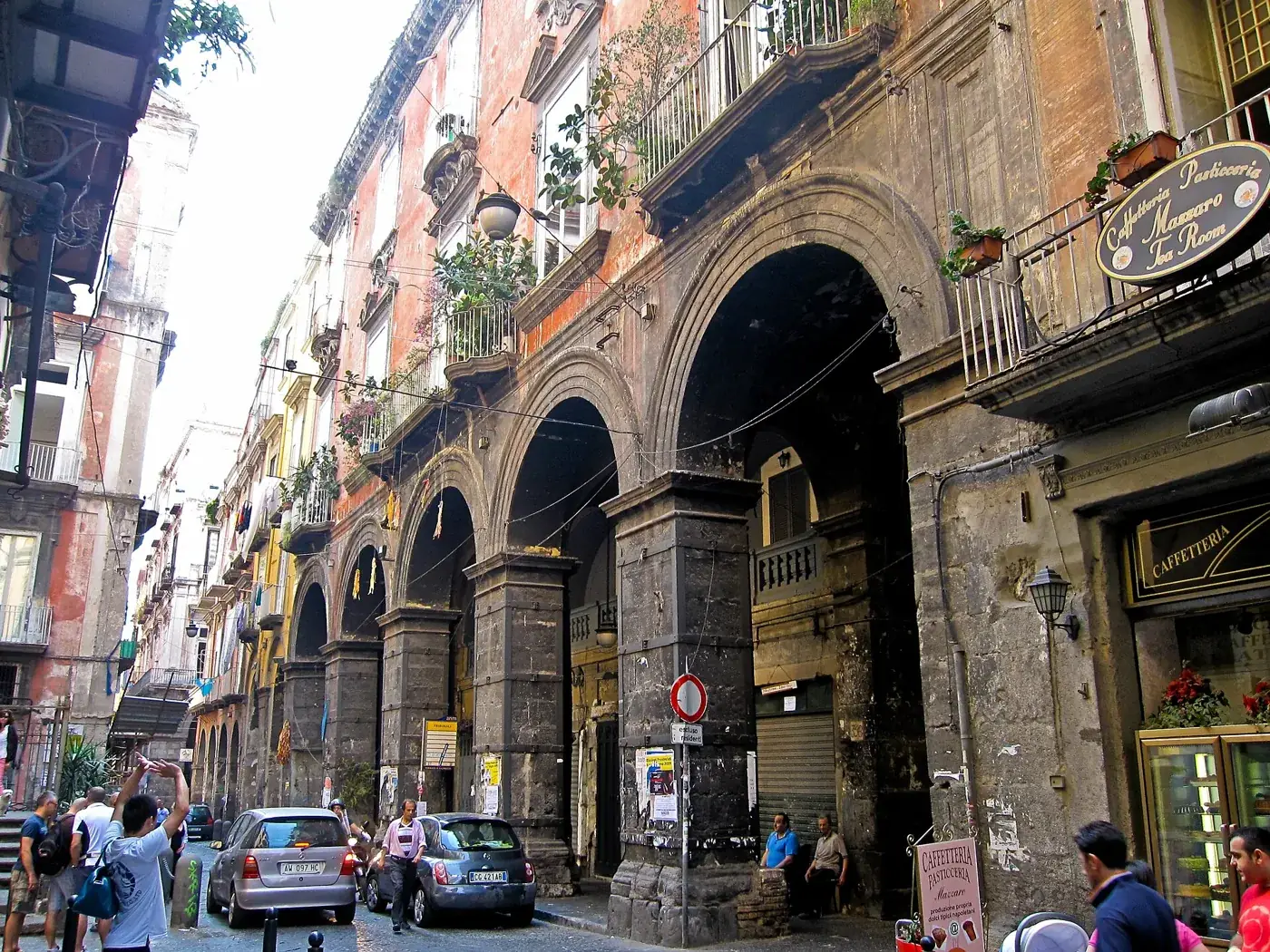
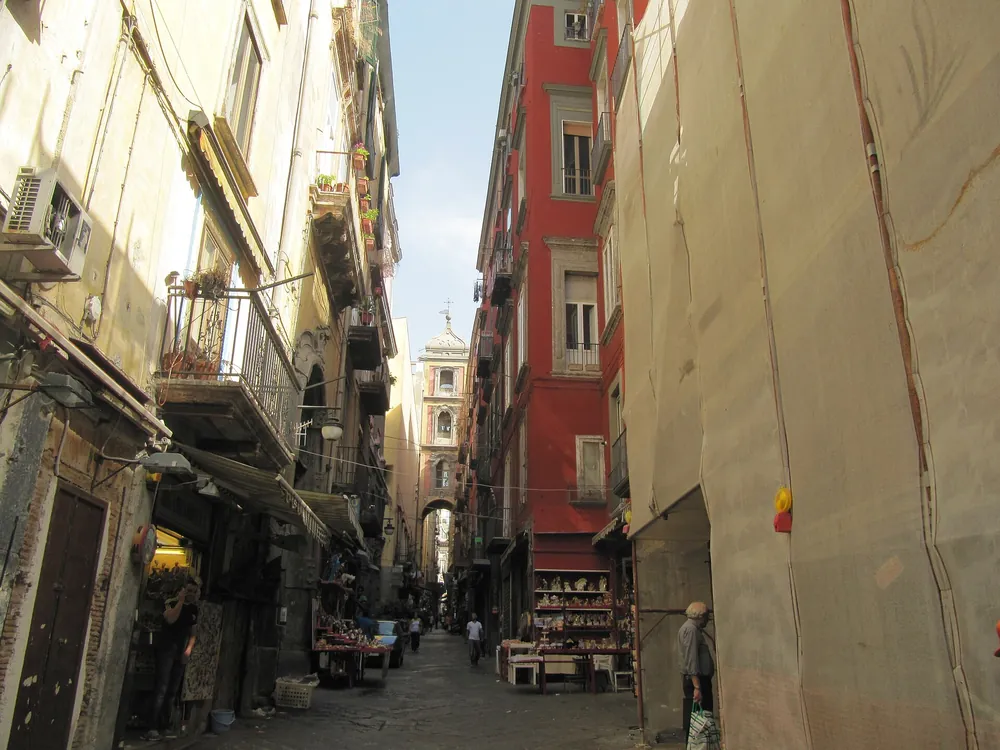
Spaccanapoli is the straight street that slices the old town from west to east, the one you see in full from the San Martino lookout. Together with via dei Tribunali, the main decumanus, it is the grid of Greek Neapolis with baroque churches built on top. It is free, open at any hour, and takes half a day to do properly. Metro: Dante or Università (Line 1) at one end, Duomo (Line 1) at the other. When to go: before 10, when the shutters go up and the tour groups have not arrived yet.
Sansevero Chapel and the Veiled Christ
Raimondo di Sangro’s chapel, at via Francesco De Sanctis 19, holds Giuseppe Sanmartino’s Veiled Christ, the other veiled statues and the two Anatomical Machines in the basement. It is small and takes thirty to forty minutes. Hours: daily 9:00-19:00, closed Tuesdays, last entry 18:30. Tickets: 12 euros, 8 for ages 18 to 26, 6 for ages 10 to 17, free up to age 9; audio guide 3.50. Online booking is compulsory: tickets are released sixty days ahead, with a second batch two days before the date. Metro: Dante, a seven minute walk. When to go: the first slot at 9:00 or after 17:00; if everything is sold out, the guided visit with entry included books it for you.
Santa Chiara and the majolica cloister
Behind the Gothic basilica is the cloister of the Poor Clares covered in eighteenth century majolica: pillars and benches painted with country scenes, lemons and vines. The ticket covers the cloister, the Opera museum, the excavated Roman baths and the eighteenth century nativity scene. Hours: Monday to Saturday 9:30-17:00, Sunday 10:00-14:00. Tickets: 7 euros, 5 reduced (over 65, university students under 30, teachers), 4 for ages 7 to 17, free under 7. The church is free and opens 7:45-12:45 and 16:40-20:00. Time: forty five minutes. Metro: Dante, an eight minute walk, or Università. When to go: in sunshine, because the majolica lives on light; on Sundays it closes at 14:00.
San Gregorio Armeno
The nativity street runs between Spaccanapoli and via dei Tribunali: a hundred metres of workshops where figurines are made by hand all year, not just at Christmas. It is free and takes half an hour, but from 1 November 2026 the nativity fair starts and the crowds double the time. Metro: Duomo or Dante, a ten minute walk. When to go: on weekdays before noon; on December weekends the street becomes one way for pedestrians and you move at the pace of a procession.
The Cathedral and the Treasure of San Gennaro
The cathedral on via Duomo holds three buildings in one: the fourteenth century Gothic nave, the early Christian basilica of Santa Restituta with the baptistery of San Giovanni in Fonte, the oldest in the West, and the Chapel of the Treasure of San Gennaro, home to the bust and the vials of blood that liquefy three times a year (19 September, the Saturday before the first Sunday of May, and 16 December). Entry to the cathedral and the chapel is free; the church opens in the morning and afternoon with a lunch break. The Treasure Museum next door has a separate ticket: its official site was down today, and in recent months it cost around 8 euros with an audio guide. Time: one hour, two with the museum. Metro: Duomo (Line 1). When to go: weekday mornings; on Sundays there are masses and you cannot wander.
Pio Monte della Misericordia
Two steps from the cathedral, at via dei Tribunali 253, the octagonal church of the Pio Monte has Caravaggio’s Seven Works of Mercy on the altar, painted in 1607 for an institution that still exists and still does charity work. Upstairs is the picture gallery, with Luca Giordano and Ribera. Hours: Monday to Saturday 10:00-18:00 (last entry 17:30), Sunday 9:00-14:30. Tickets: 10 euros with audio guide, also from the official online ticket office. Time: forty minutes. Metro: Duomo, two minutes. When to go: early morning, when the light comes in from above; it is the easiest Caravaggio to see in the city, with no queue.
Napoli Sotterranea
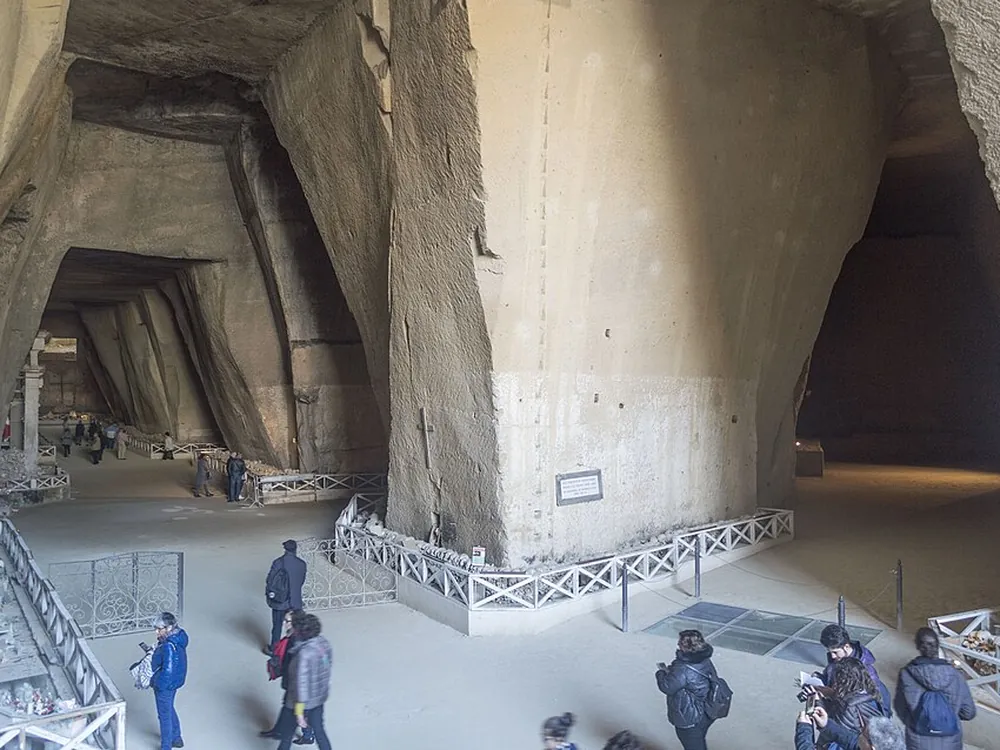
The entrance is at piazza San Gaetano 68, on via dei Tribunali: you go forty metres down into the Greek tufa quarries that became an aqueduct and then an air raid shelter, with a narrow candlelit stretch (optional) and, back on the surface, the remains of the Roman theatre inside a ground floor flat. Guided tours leave every hour from 10:00 to 18:00, daily; on Thursdays at 21:00 by reservation with at least ten people. Tickets: 18 euros full, 10 reduced (according to the official site’s FAQ). Time: a good hour. Metro: Dante or Duomo, a ten minute walk. When to go: in the rain or in July heat, since the temperature below does not change; avoid weekend lunchtimes. The story of the quarries is in the article on underground Naples.
San Lorenzo Maggiore and the Greek city
On the same square, beneath the Franciscan basilica, you go down into the Roman market: a street with shops, the public treasury, the laundry, ten metres below today’s asphalt. Above, the Gothic church with its French apse and the museum in the convent rooms. Hours: daily 9:30-17:30. Tickets: 9 euros, 7 reduced (over 65, teachers, university students), 6 under 18, free under 6. Time: one hour. Metro: Dante or Duomo. When to go: in the afternoon, when Napoli Sotterranea across the square is busier and here you go down almost alone; with an archaeologist it is a different visit, as in the Greek city beneath San Lorenzo.
Toledo, Plebiscito and the sea
Via Toledo is the straight street of 1536 that runs from Dante station to piazza del Plebiscito: 1.2 kilometres of shops, with the Quartieri Spagnoli climbing on the right. At the far end, within three hundred metres, you have the gallery, the opera house, the palace and the castle. Metro: Toledo and Municipio (Line 1).
Galleria Umberto I
The 1890 arcade with its glass and iron dome and four arms in a cross: you enter from via Toledo and come out in front of the San Carlo. It is a public passageway, free and always open. Time: ten minutes, fifteen if you look for the zodiac signs in the floor at the centre. Metro: Toledo, three minutes. When to go: in the evening, when the dome is lit and the bars put their chairs out.
Royal Palace
The residence of the viceroys and then the Bourbons, on piazza del Plebiscito: the grand staircase, the court theatre, the throne room, the thirty rooms of the Royal Apartment, plus the Caruso Museum and the Museo della Fabbrica. Hours: 9:00-20:00, last entry 19:00, closed Wednesdays, 1 January and 25 December. Tickets: 15 euros, 2 for ages 18 to 25, free under 18; 17 euros combined with the Pignatelli Museum. The Romantic Garden is free, 9:00-19:00. Time: an hour for the apartment, by the museum’s own estimate. Metro: Municipio, five minutes. When to go: late afternoon, when the other state museums close and this one stays open until eight; not on Wednesdays, when it is closed.
Teatro di San Carlo
The oldest opera house in Europe still in use, from 1737, attached to the Royal Palace: the horseshoe auditorium with six tiers of boxes, the royal box, the foyer. You visit with a guide, thirty minutes, at 10:30, 11:30, 12:30, 14:30, 15:30 and 16:30 (in English at 11:30 and 15:30); tours depend on stage rehearsals and can change or be cancelled. Tickets: 9 euros, 7 reduced for young people, 26 for a family with two children; the MeMus museum is separate. Metro: Municipio or Toledo. When to go: in the morning, when the stage is more often free.
Castel Nuovo, the Maschio Angioino
The castle on piazza Municipio, with Alfonso of Aragon’s triumphal arch wedged between two towers: inside are the Palatine Chapel, the Hall of the Barons, the civic museum and the excavations with burials under a glass floor. Hours: Monday to Saturday 9:00-18:00, last entry 17:30, closed Sundays and public holidays. Tickets: 10 euros, 6 for residents, free under 18, also online at biglietti.comune.napoli.it. Time: one hour. Metro: Municipio, the exit faces the moat. When to go: not on Sunday, when it is closed; in the morning, then the square and the port.
Castel dell’Ovo and the waterfront
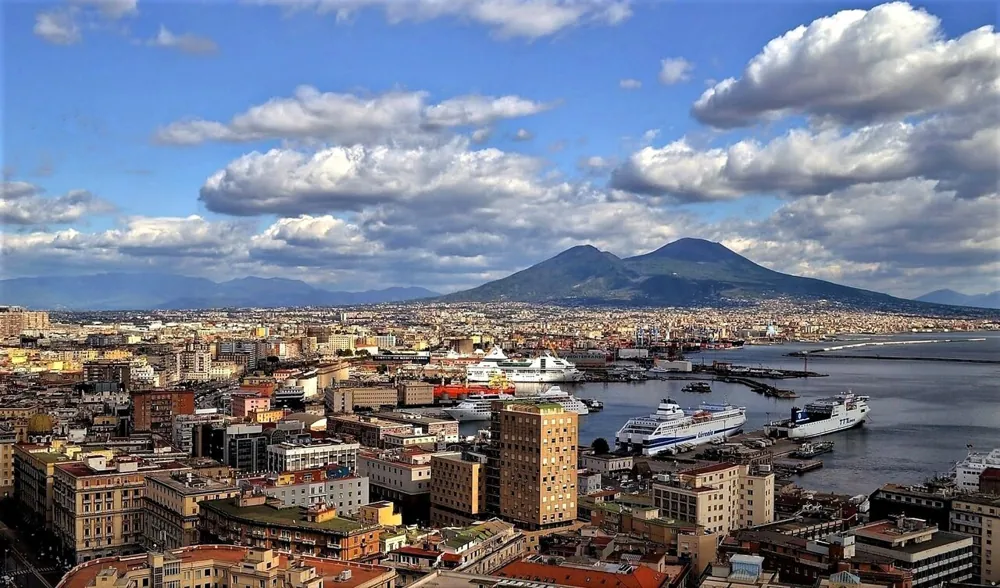
The castle on the islet of Megaride, with terraces over the bay. After almost four years of works it reopened at the end of September 2026, for the America’s Cup preliminary regattas, with visits by reservation: arrangements change as the works are completed, so check the city council’s page before you go. The Borgo Marinari at its feet, with its boats and restaurants, and the via Partenope waterfront are always open and free. Time: one hour, sunset included. Metro: Municipio, then a twenty minute walk along via Santa Lucia. When to go: an hour before sunset, looking at it from Mergellina with Vesuvius behind.
The big museums
MANN, the National Archaeological Museum
On piazza Museo: the Farnese collection with the Bull and the Hercules, the frescoes and mosaics from Pompeii and Herculaneum, the Secret Cabinet and the Egyptian section. Hours: 9:00-19:30, closed Tuesdays (when a Tuesday is a public holiday it opens and closes the following Wednesday instead: this happens on 8 December 2026). Tickets: 20 euros, 2 for ages 18 to 25, free under 18. Some rooms close in rotation for refurbishment works: the calendar is on the website. Time: three hours. Metro: Museo (Line 1) or Cavour (Line 2), the exit is right outside. When to go: weekday mornings; the first Sunday of the month is free but the Egyptian collection, the Secret Cabinet and the Magna Graecia section stay closed. To understand what you are looking at, the MANN with an archaeologist.
Capodimonte Museum and Royal Park
The palace in the woods, on the hilltop: Titian, Masaccio, Caravaggio’s Flagellation, the Armoury, the porcelain and contemporary art on the upper floor. Hours: daily except Wednesdays, 8:30-19:30, last entry 18:30; closed 1 January and 25 December. Tickets: 15 euros, 2 for ages 18 to 25, free under 18 (the official site would not load today: figures confirmed on a local guide updated in August 2026). The Royal Park is free: it opens at 7 and closes at 17:00 in winter, 19:30 in summer. Time: three hours, plus the park. Getting there: the metro does not reach it; from the MANN take a bus up via Capodimonte, ten to fifteen minutes, or a taxi. When to go: Saturday or Sunday morning, when the Neapolitans are in the park and the galleries are empty.
Certosa and Museum of San Martino
The charterhouse on the Vomero hill, next to Castel Sant’Elmo: the baroque church with Ribera and Lanfranco, the Great Cloister, the Cuciniello nativity scene, the carriages and the lookout from the monks’ gardens over the whole city. Hours: daily except Tuesdays, 8:30-18:30, ticket office until 17:30 (the regional museums directorate site was down today: figures from the last official notice, in force since 1 July 2026, and from the local press). Tickets: 6 euros, 2 for ages 18 to 25, free under 18. Time: two hours. Getting there: the Centrale funicular from via Toledo (Augusteo) to piazza Fuga, or the Montesanto funicular to Morghen, then a ten minute walk; or metro Vanvitelli and a quarter of an hour. When to go: late afternoon in winter, for the light on the bay from the lookout.
Castel Sant’Elmo
The sixteenth century star shaped fortress above the charterhouse, with the parade ground that is the city’s highest 360 degree viewpoint, and the Museo del Novecento inside. Hours: 8:30-19:30 daily; the museum is closed on Tuesdays. Tickets: 5 euros, 2.50 reduced (again from local sources: the official site was down). Time: one hour. Getting there: the Montesanto funicular to Morghen, then five minutes uphill, or metro Vanvitelli. When to go: at sunset; it is one of the few places open until 19:30 where you watch the sun go down behind Posillipo.
The Sanità: catacombs and the Fontanelle
The district below Capodimonte, outside the ancient walls, where Neapolitans buried their dead and where today you go for the catacombs, the palaces with open staircases and the murals. The full guide to the neighbourhood is Rione Sanità: catacombs, murals and Palazzo dello Spagnuolo; here are the two ticketed places.
Catacombs of San Gennaro
The entrance is at via Capodimonte 13, next to the basilica of the Incoronata Madre del Buon Consiglio: two levels of galleries dug into the tufa from the second century, with early Christian frescoes. Guided tours leave every hour from 10:00 to 17:00, daily except Wednesdays and 25 December; booking is compulsory. Tickets: 13 euros, 9 for students and over 65, 6 under 18, free under 6; the ticket also covers the Catacombs of San Gaudioso, beneath the basilica of Santa Maria della Sanità. Time: an hour per site. Getting there: metro Museo or Materdei (Line 1) and a twenty minute walk. When to go: the first slot of the morning, then walk down into the district for lunch; the guided visit of the Catacombs of San Gennaro can be booked from the site.
Fontanelle Cemetery
The tufa quarry at via Fontanelle 80 with tens of thousands of anonymous remains, the «anime pezzentelle», the poor souls Neapolitans adopted in exchange for favours. It reopened in April 2026 after restoration: 10:00-18:00, last entry 17:15, closed Wednesdays and 25 December; entry only with a reservation on cimiterodellefontanelle.it. On Mondays and Fridays from 9:00 to 10:00 entry is reserved for people who come to pray. Time: forty minutes. Getting there: metro Materdei, a ten minute walk downhill. When to go: on weekday mornings.
The art metro: Toledo and the other stations
Line 1 is also a museum, for the price of a single ride: 1.50 euros. Toledo, dug forty metres beneath via Toledo, is Óscar Tusquets Blanca’s station with the cone of blue mosaics and William Kentridge’s works on the mezzanine: ride the escalators all the way down even if you are not catching a train. When to go: outside rush hour, between 10 and 13.
Day trips: Pompeii, Herculaneum, Vesuvius
Three places that are not Naples but are on everyone’s list: all reached on the Circumvesuviana railway from piazza Garibaldi, the Sorrento line.
Pompeii
The archaeological park opens at 9:00 daily; from 15 October to 15 March it closes at 17:00 with last entry at 15:30, from 16 March to 14 October at 19:00 with last entry at 17:30; closed 25 December and 1 January. Tickets are named: Pompei Express 20 euros, Pompei+ with the suburban villas 25 euros, 2 euros for EU citizens aged 18 to 25, free under 18; with a cap of twenty thousand entries a day, so buy online on Vivaticket. Time: four hours minimum. Getting there: Circumvesuviana to Pompei Scavi-Villa dei Misteri, about 35 minutes, with the Porta Marina entrance two minutes from the station. When to go: at opening, or after 14:00 in summer; the rest is in the guide to Pompeii from Naples.
Herculaneum
Smaller than Pompeii and better preserved, with upper floors, carbonised wood and the skeletons in the boat sheds on the ancient beach: you see it in two and a half hours without rushing. Hours: from 16 March to 14 October 8:30-19:30 with last entry at 18:00; from 15 October to 15 March 8:30-17:00 with last entry at 15:30. Tickets: check the current price on the park’s website or the official CoopCulture ticket office; as in the other state sites, 2 euros for ages 18 to 25 and free under 18. Getting there: Circumvesuviana to Ercolano Scavi, twenty minutes, then a ten minute walk downhill. When to go: in the afternoon, before the groups who did Pompeii in the morning arrive; or in the morning, combined with Vesuvius.
Vesuvius
You climb the Gran Cono on foot from the car park at a thousand metres: a half hour path of lapilli to the crater rim, then the walk round with the bay below. Hours: November to February 9:00-15:00, March and October 9:00-16:00, April to June and September 9:00-17:00, July and August 9:00-18:00. Tickets: 10 euros, 8 under 25, free under 6, sold only online at vesuviopark.vivaticket.it with a time slot. Time: two hours between climb, crater and descent, plus transport. Getting there: Circumvesuviana to Ercolano Scavi or Pompei, then the EAV buses to the car park. When to go: under a clear sky after a windy day; in winter it closes early, so take a mid morning slot.
The map and ready-made itineraries
All these places are on the site’s map of Naples, with metro stops and places to eat nearby. If you are short on time: Naples in one day puts together the old town, Toledo and the funicular hour by hour; Naples in 3 days adds the hills and a day out of town. The two day itinerary is coming in the next few weeks.
Frequently asked questions
How many days do you need to see Naples?
Three full days for the twenty places on this list without rushing: one for the old town, one for Toledo, the sea and the Vomero, one for the big museums or the Sanità. With a fourth day you add Pompeii or Herculaneum with Vesuvius. In a single day you can do the old town with a climb up to San Martino, and that is already a long day.
What needs booking in advance?
The Sansevero Chapel (tickets online sixty days ahead, more two days before), the Catacombs of San Gennaro, the Fontanelle Cemetery and the Gran Cono of Vesuvius, where you cannot get in without a reservation. For Pompeii booking is not compulsory but tickets are named with a daily cap, so it is worth it; the San Carlo is booked by phone or email; for the MANN, Capodimonte and the Royal Palace you buy on the spot.
Which places are closed on Tuesdays and which on Wednesdays?
On Tuesdays the Sansevero Chapel, the MANN, the Certosa di San Martino and the Museo del Novecento at Sant’Elmo are closed. On Wednesdays the Royal Palace, Capodimonte, the Catacombs of San Gennaro and the Fontanelle Cemetery are closed. Castel Nuovo closes on Sundays. Pompeii, Herculaneum, Santa Chiara, San Lorenzo, Napoli Sotterranea and the Pio Monte are open every day, with shorter Sunday hours where noted.
What can you see in Naples for free?
Spaccanapoli and the decumani, San Gregorio Armeno, the cathedral with the Chapel of the Treasure, the church of Santa Chiara (not the cloister), the Galleria Umberto, piazza del Plebiscito, the waterfront and the Borgo Marinari, the Capodimonte park and, with a metro ticket, the art stations. On the first Sunday of the month all the state museums join the list.
Information checked on 4 October 2026 on each place’s official website; where the site was down I say so in the chapter. Hours and prices change: before you set off, glance at the official page, and to decide what to do once you are there, from pizza to boats, there is things to do in Naples.
- things to see in naples
- what to see in naples italy
- naples attractions
- naples museums
- naples monuments
- naples sightseeing

Who wrote this
Gianluca Scanni
Founder @ Cose Fighe