The Royal Palace of Caserta from Naples: train from Napoli Centrale, a short walk, royal apartments, park, waterfall, English Garden, hours, closing day.
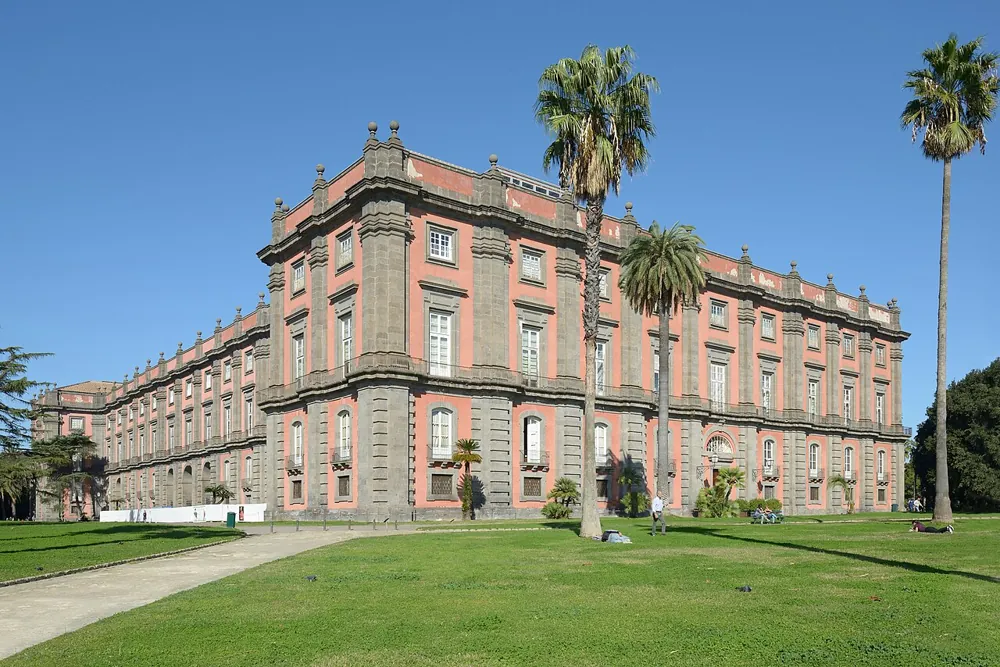
The Reggia di Caserta (Royal Palace of Caserta) is the easiest day trip you can take from Naples: one regional train, five minutes on foot and you're in front of the palace. The hard part comes later, because inside there are more than a thousand rooms and a park three kilometres long. Here's how to get there, which ticket to buy, what to see and how to avoid spending half the day walking past the same row of fountains.
By train from Napoli Centrale, then on foot
Trenitalia regional trains to Caserta leave Napoli Centrale dozens of times a day. The journey takes between half an hour and forty minutes, depending on the train and its stops. Buy the regional ticket from the machines at the station or on the Trenitalia app; if it's a paper ticket, remember to validate it.
Caserta station is right opposite the palace. Walk out, cross the avenue and the flowerbeds of Piazza Carlo di Borbone and you're at the main gate: five minutes, no bus, no taxi. It's also why you don't need a car.
Tickets, opening hours and closed on Tuesdays
The palace is closed on Tuesdays, its weekly day off, and on 25 December. From April to September the Royal Apartments are open 8.30am-7.15pm with last entry at 6.15pm, the park 8.30am-7pm with last entry at 6pm, and the English Garden 8.30am-6pm. From October to March the park closes earlier, with hours that change month by month: the up-to-date table is on the palace's official website. Last entry through the main gate is 6pm regardless.
The full ticket covers the Apartments, the park and the English Garden; there are also palace-only and park-only tickets. Online, the only authorised seller is TicketOne; otherwise buy at the ticket office on the square. You can't leave and come back in on the same ticket, so plan the day in one direction: palace first, then park.
On the first Sunday of every month entry is free, under the Domenica al Museo (Sunday at the Museum) scheme. Two things to know: it's very busy, and that day the English Garden stays closed. If the garden is why you're going, pick another day.
Inside the palace: grand staircase, royal apartments, theatre
Charles of Bourbon commissioned it, laying the first stone in 1752, to have a court that could stand comparison with Versailles, and gave the job to Luigi Vanvitelli. The showstopper is the Scalone d'Onore, the grand staircase: more than a hundred marble steps under a double vault, with lions at the bottom and the octagonal vestibule at the top, where the palace's lines of sight cross. From there you enter the Royal Apartments: the 18th-century rooms with their frescoes, the 19th-century ones redone by the Murats and the Bourbons, the very long throne room, the bedroom of Francis II, and the royal presepe (nativity scene) with hundreds of figures.
On Saturday and Sunday mornings you can also visit the Teatro di Corte (Court Theatre), thanks to Touring Club volunteers: a small horseshoe theatre with rows of boxes and columns either side of the stage, opened for the carnival of 1769. The Palatine Chapel recalls the chapel at Versailles and holds Mass on Sunday mornings. Allow a couple of hours for the palace.
The park, the waterfall and the English Garden
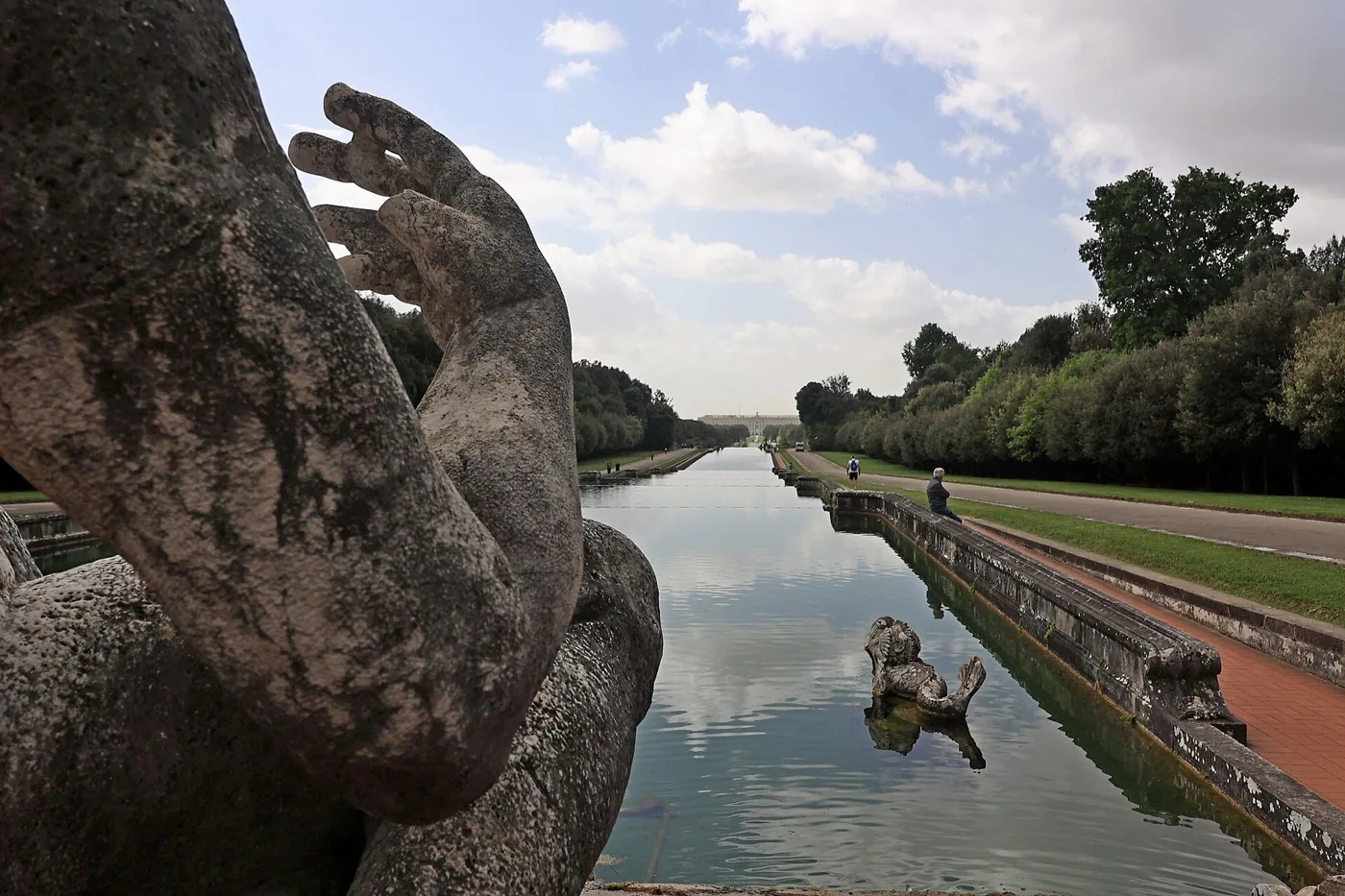
The park is one long axis of water climbing towards the hill: the Fontana Margherita, then the fountains of the Dolphins, Aeolus, Ceres, and Venus and Adonis, up to the Fountain of Diana and Actaeon at the foot of the Cascata Grande, the great waterfall that drops eighty metres down the rock. From the palace to the waterfall it's about three kilometres on a gentle incline: on foot it takes three quarters of an hour just to get there.
That's why there's an electric shuttle following the waterway, stopping at the fountains of the Dolphins, Aeolus, and Diana and Actaeon: it leaves from the park entrance, runs every day from 9am until the park closes, and a return ticket costs €3. Alternatively, you can hire bikes inside the park, electric ones too, which is the most fun way to do the climb.
Next to the waterfall you enter the English Garden, commissioned by Queen Maria Carolina at the end of the 18th century: rare plants brought from half the world, ponds, fake Roman ruins and the Bath of Venus, with a statue of the goddess rising from the water. It closes before the park, so do it first when you reach the top.
How to do it with less hassle
Timing first. To do the palace and park properly you need a full day: a couple of hours inside, three or four outside, and lunch in between. If you only have half a day, choose: the Apartments plus a walk to the Fountain of the Dolphins, or the park by bike up to the waterfall. Bring water and a hat, because there's little shade along the central axis and in summer the avenues bake.
If you have time to spare, the palace has two relatives a few kilometres away, which UNESCO included in the same World Heritage Site in 1997. The Belvedere di San Leucio is the silk village founded by Ferdinand IV, with its silk mill and historic looms; the Acquedotto Carolino is Vanvitelli's aqueduct that feeds the waterfall, with the Ponte della Valle and its three tiers of arches. For both you'll need a car or a taxi from the station.
A day at the palace works fine on your own, but if you'd like someone to bring the rooms to life and spare you the queue, there's the Royal Palace of Caserta in three hours: groups of up to sixteen, the staircase and Apartments with a guide, then the shuttle up to the waterfall and the English Garden.
If palaces and museums are your thing, the rest of Naples' art listings are in the Art section, and the map shows where everything is in relation to Napoli Centrale. For other day trips, read our guides to Pompeii from Naples and Capri in a day.
- royal palace of caserta
- caserta
- day trips from naples
- vanvitelli
- campania museums

Who wrote this
Gianluca Scanni
Founder @ Cose Fighe