Real historic pizzerias and trattorias in Naples, area by area: addresses, prices, hours and how to spot the places built only for tourists passing through.
In Naples you eat well almost everywhere, but not everywhere in the same way. Some pizzerias have a century of real, documented history, with the same family behind the counter for generations. Others opened yesterday to catch whoever wants the right photo for social media. Here are the first kind, area by area, with addresses, hours and price ranges that have been checked, plus a few historic trattorias and how to spot the places built only for someone who passes through once and never comes back.
The guide follows a geographic route, from the old centre toward the sea: via dei Tribunali, Forcella, Materdei and the Sanità district, Chiaia, Mergellina, down to the trattorias further from the usual tourist loop. You don't need to do them all in one day: even two or three stops, chosen around where you're staying or what you're visiting, are enough to get a real feel for it.
If you're after something to eat while walking instead, pizza a portafoglio and cuoppo included, there's already a dedicated guide to Naples street food: this page is about places where you sit down at a table.
Via dei Tribunali: the most talked-about pizzerias
Via dei Tribunali, in the old centre, is the street with the highest concentration of historic pizzerias in the city, and also the one with the longest queues outside the doors. It's also one of the Decumani, straight and narrow between tall buildings, ground-floor basso homes with their doors open onto the street, baroque churches one after another: the pizza queue is just one of the things you notice walking along it. At number 32 is Gino Sorbillo, opened in 1935 by Luigi Sorbillo and Carolina Esposito: the couple had twenty-one children, all of whom became pizza makers, and Gino, from the next generation, took over the historic location in the 1990s. It's open every day except Sunday, roughly from noon to 11:30pm; the queue forms by midday on weekends.
A little further on, at number 94, is Antica Pizzeria e Friggitoria Di Matteo, opened in 1939 by Salvatore Di Matteo with his father and brother Gennaro, which started as a fry shop before it was a pizzeria: fried pizza is still the specialty it's known for. It's the place from the famous photo of July 1994, when Bill Clinton, in Naples for the G7 summit, stopped at the counter and pizza maker Ernesto Cacialli handed him a pizza a portafoglio, a street-food fold: an image that became part of the city's history. Be careful not to confuse it with another pizzeria on the same street that claimed the same story: it was seized in 2024 as part of an investigation into camorra infiltration, according to Ansa and the local press. The real story, with the family still running it today, belongs to Di Matteo.
Forcella: da Michele and the Trianon, two pizzas against a three-floor oven
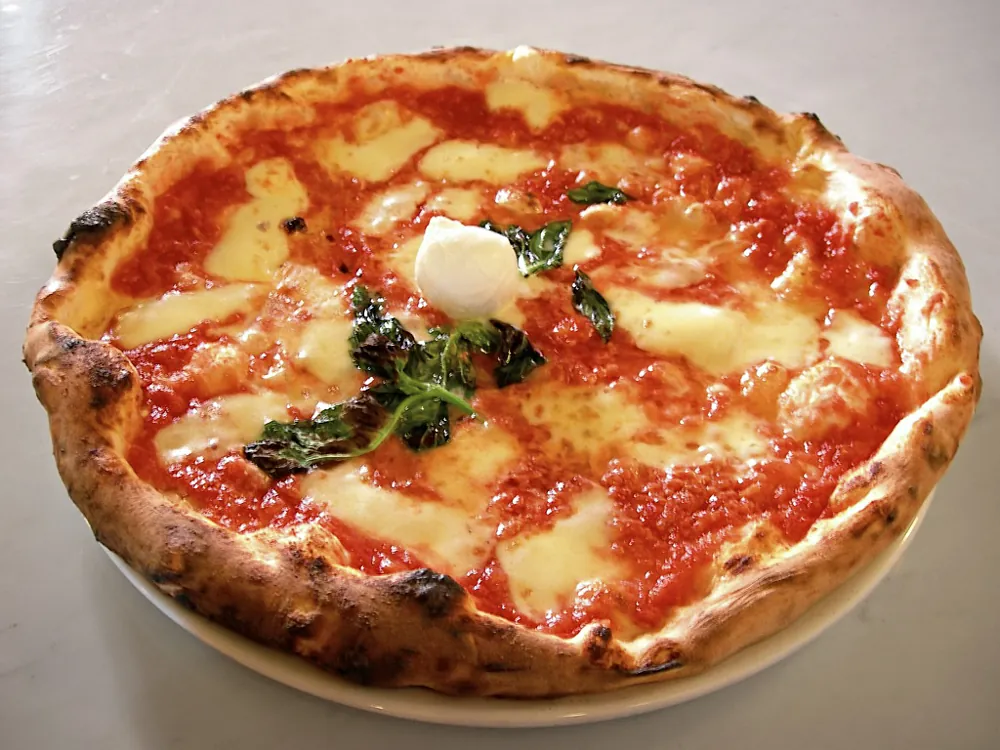
A few minutes' walk away, on via Cesare Sersale, is Antica Pizzeria da Michele, open since 1870 and still loyal to a menu of just two pizzas: margherita and marinara, from 4 to 5 euros depending on size. You walk in, take a number, and wait outside for up to an hour on weekends: no exceptions, and nothing else to order. The dining room is bare, marble tables, walls covered in photos of passing customers who later became famous: it hasn't changed in decades, and that's exactly the point. It's the strictest setup on this list, and for many that's precisely what makes it the most faithful to tradition.
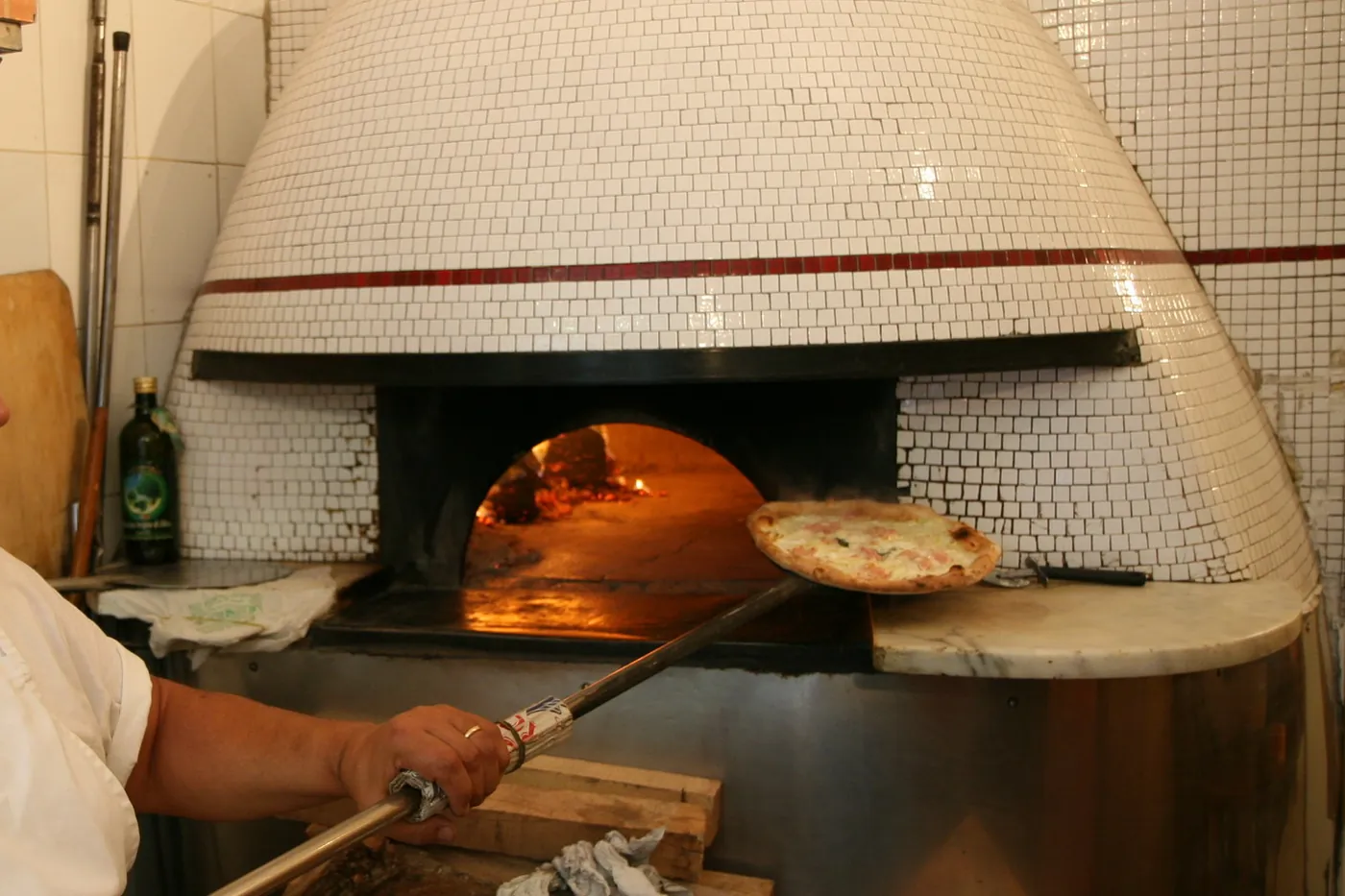
If you don't want to wait, the Trianon da Ciro, on via Pietro Colletta, opened in 1923 by Ciro Leone and Giorgina De Somma and still run by the same family, is the better option: three floors, each with its own oven, so shorter queues even when the dining room is full. This is where the pizza ruota di carretto was born, a cart-wheel pizza bigger than the plate, meant to be shared.
Materdei and the Sanità district: over a century, and a rebirth
Heading up toward Materdei, Pizzeria Starita has been open since 1901, when Alfonso Starita opened a wine shop that over time also became a fry shop and pizzeria: today it's run by the fifth generation of the same family. It's often described as the set of the film L'oro di Napoli with Sofia Loren, but several journalistic investigations, based on comparing period photos, place the real filming location in a different shop in the area: the pizzeria's own history stays just as real and verified, minus that film. Among the house specialties is the montanara, a pizza that's fried and then finished in the oven with tomato and basil: one extra step compared to the classic fried version.
In the Rione Sanità, in front of a votive shrine dedicated to three saints (which gives the place its name), is Concettina ai Tre Santi: the trattoria was founded in 1951 by Concettina Flessigno Oliva, who fried pizzas outside her basso home for the whole neighbourhood, and today it's run by her great-grandson Ciro Oliva, named best pizza maker under 35 in 2021. It's one of the places that has done the most to change the Sanità district's reputation in recent years, with pizzas that are more elaborate than tradition but still rooted in the same spot it's always occupied.
Chiaia: the Margherita and a century of tablecloths
In Chiaia, on via Alabardieri, the restaurant Umberto has been open since 1916: it was opened by Umberto Di Porzio and his wife Ermelinda as a trattoria serving wine straight from the barrel, with pizza joining the menu in 1924. Today it's run by the fourth generation of the same family and is among the places recognised by Naples' Union of Historic Centenarian Pizzerias: beyond pizza, the menu also covers classic Neapolitan first and second courses, useful if someone in your group doesn't want pizza.
A short walk further, on salita Sant'Anna di Palazzo, Pizzeria Brandi tells the story of being the place where the Margherita pizza was born in 1889, served at the Capodimonte palace to King Umberto I and Queen Margherita of Savoy: a historic royal document, displayed in the dining room, backs up the story, though several food historians question the exact date and argue a similar pizza already existed before that episode. In October 2022 the venue was temporarily closed by Italy's health inspectors (the Nas) for hygiene violations; today it's open again, Tuesday to Sunday, 12:30-3:30pm and 7:30-11:30pm, closed Mondays. It's one of the more touristy spots on this list: good pizza, higher than average prices, service that isn't always up to par according to more recent reviews. Go for the history, not expecting a neighbourhood pizzeria.
Mergellina: the award-winning pizza
On piazza Sannazzaro, with a sea view, 50 Kalò by Ciro Salvo doesn't have a century of history but does have a ranking: fifth in Italy and fourteenth in the world in the 50 Top Pizza 2026 guide. The dough is light, long-fermented, with few well-chosen ingredients: the reinforced marinara and the margherita with buffalo fiordilatte are the most ordered, between 6.50 and 9.50 euros. No reservations: you leave your name at the counter and wait for your turn, often outside, with the gulf in front of you.
The trattorias: where you eat everything else
Near piazza Dante, on via Conte di Ruvo, Osteria da Carmela has been open since 1967, started by Don Vincenzo on his wife Carmela's idea: just eight tables, home cooking with the occasional seafood dish, recipes passed down through the generations. With so few seats, it's worth booking ahead, especially for dinner.
Trattoria da Nennella, born in 1949 in the Quartieri Spagnoli as a stall of hot dishes for workers heading out at dawn, is known for its theatrical service: waiters sing, improvise jokes, and sometimes toss bread from one table to another. In 2023 it moved from its historic location on vico Lungo Teatro Nuovo to piazza Carità: if you look for the old address, you won't find it there anymore. Pasta e fagioli and genovese remain the dishes it's best known for.
How to spot tourist traps
None of the places in this guide need to talk you into coming in from the street, and that's the first sign to watch for. Be wary of restaurants with a tout at the door inviting you in, laminated menus with photos of the dishes translated into six languages, and pizza lists with made-up names that don't exist in any other pizzeria in the city.
By Italian law, the cover charge (coperto) must always be clearly stated on the menu before you order: if it shows up on the bill without having been written anywhere, that's an improper practice and you can dispute it at the till, or report it to the local police if the venue insists. The same goes for fish sold by weight: if the menu doesn't show the price per kilo clearly, ask before you order, not after.
Another useful sign, simpler than all the rest: look at who's inside. If at noon on a weekday the place is full only of tourists and empty of locals, in a city where people eat out often and happily, that's unlikely to be a coincidence.
At the historic places listed in this guide you can almost always pay by card too, but carrying some cash helps avoid waits at the till in the smaller, busier spots, where a single till serves every table.
What it costs
Rough price range, pizza and a drink
- Da Michele, Sorbillo, Di Matteo, Trianon: 6-9 euros
- Starita, Umberto, Concettina ai Tre Santi: 8-12 euros
- 50 Kalò, Brandi: 10-15 euros
- Osteria da Carmela, Trattoria da Nennella (full meal): 20-30 euros
The higher price ranges depend more on service and location than on the quality of the dough: the simplest historic pizzerias remain among the most affordable in the city, awards included.
For the rest of the day, between one pizzeria and the next, the things to do in Naples page updates daily with events and ideas, and the map helps you work out which of these places are close to each other before deciding where to head for lunch. More ideas on eating in the city are in the Food section.
Frequently asked questions
Do you need to book at Naples' historic pizzerias?
Almost none of the most famous historic pizzerias, from Da Michele to Sorbillo, take reservations: you queue or wait your turn. Trattorias with few tables, like Osteria da Carmela, are worth booking a day ahead instead.
Which is the oldest pizzeria in Naples still open?
Among the places in this guide, Pizzeria Brandi claims the longest history, with roots said to go back to 1780, while Antica Pizzeria da Michele has been open since 1870 at the same address and with the same menu it's always had.
Is it true the Margherita pizza was born in Naples in 1889?
That's the story told by Pizzeria Brandi, with a period document on display in the dining room, but several food historians question the exact date and believe a similar pizza, with tomato and mozzarella, already existed before that episode.
Better to eat on via dei Tribunali or outside the old centre?
Via dei Tribunali has the most famous pizzerias, but also the longest queues. Materdei, the Sanità district, Chiaia and Mergellina have equally good places, often with less waiting and a slice of the city to see on the walk there.
Facts checked on 16 October 2026 against the official sites of the venues mentioned where available, 50 Top Pizza, and articles from Luciano Pignataro Wine Blog, Fanpage, Ansa and Scatti di Gusto.
For the rest of your stay: things to do in Naples today, this weekend and in the days ahead, checked every morning.
- where to eat in naples
- naples historic pizzerias
- best pizzerias naples
- naples trattorias
- neapolitan pizza

Who wrote this
Gianluca Scanni
Founder @ Cose Fighe