Free things to do in Naples, from the old town to the seafront: streets, steps, churches and markets that cost nothing, and when it's worth paying.
Free things to do in Naples is a question we get a lot, and the answer is: quite a few. Here are the places you can see without a ticket, grouped by type: old-town streets, viewpoints and steps, the seafront, churches, markets, free events coming up and a few ideas if you're travelling with children. At the end, an honest section on when it's worth handing over €10 or €20.
Free in Naples doesn't mean second best. The finest thing about the city, namely the city itself, has no ticket office: Spaccanapoli, Piazza del Plebiscito, the Galleria Umberto, the view from San Martino, the sea from Castel dell'Ovo to Mergellina. Museums cost money and some are worth it, but a whole day on foot without spending a cent is enough to understand the place.
On foot through the old town
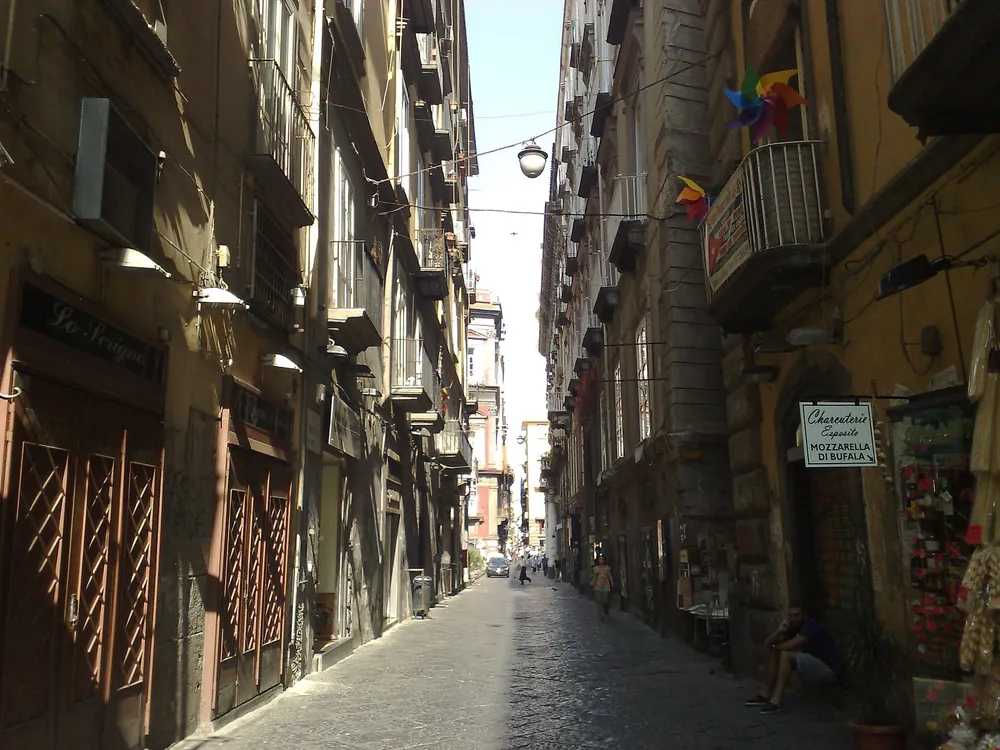
Day one goes like this: start at Piazza del Gesù and walk Spaccanapoli all the way to Forcella. It's the dead-straight street that slices the old town in two, the one that looks like a crack in the city when you see it from the Vomero hill. In one kilometre you cross two thousand years: the Gesù Nuovo, Santa Chiara, San Domenico Maggiore, and the Duomo (the cathedral) a few steps away. You don't need a map. Getting lost in the side alleys is part of the game.
From via San Biagio dei Librai, head up San Gregorio Armeno, the street of nativity-scene makers. You can browse the workshops for free all year round: shepherds, figurines of whoever is in the news, miniature cribs. In December it's heaving; the rest of the year you can walk it comfortably. At the top is via dei Tribunali, the other decumanus, one of the old Greek-Roman main streets.
Two squares deserve a stop. Leafy Piazza Bellini has Greek walls from the 4th century BC out in the open among the café tables: you can see them from the street without ordering anything. From Piazza Dante, walk down to the Plebiscito along via Toledo, pedestrianised and busy at any hour.
From above: viewpoints and steps
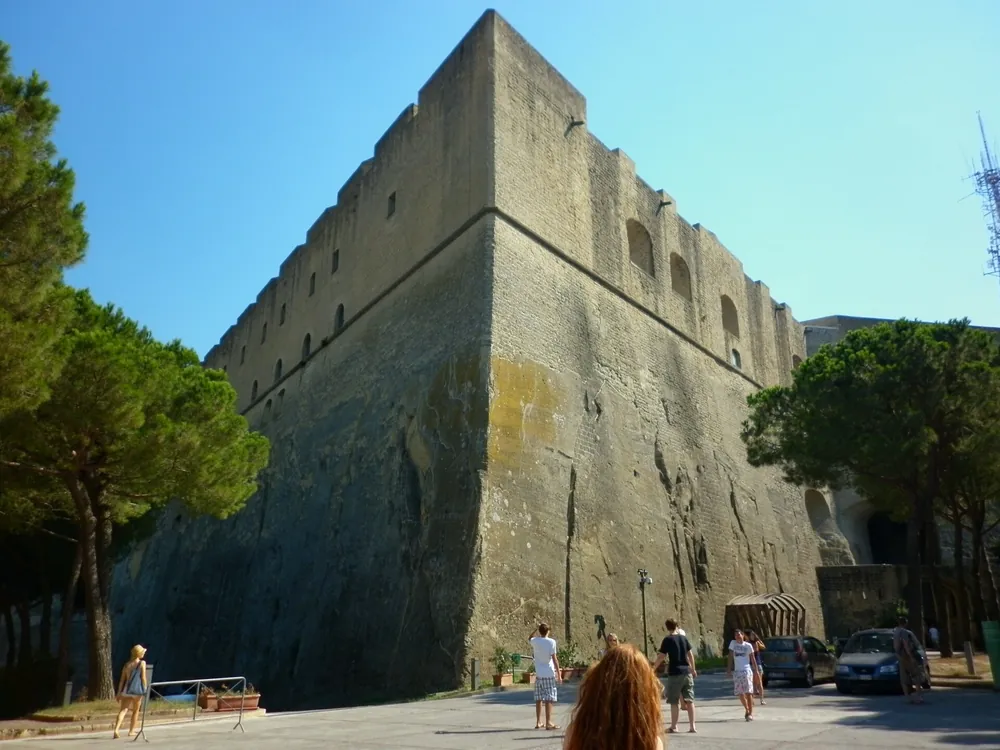
Naples is a vertical city, and the best places to grasp that cost nothing. The first is the San Martino viewpoint on the Vomero, the highest point in town: the whole city is laid out in front of you, the old town with the crack of Spaccanapoli, the port, Vesuvius and, on clear days, Capri. The Certosa (the charterhouse) and the castle next door charge admission; the terrace doesn't.
To get up there you can take the funicular from Montesanto, which costs a ticket, or the steps. The Pedamentina di San Martino is 414 steps down from the viewpoint to Corso Vittorio Emanuele, past vegetable plots and glimpses over the rooftops. The Petraio winds down from the Vomero to Chiaia between Art Nouveau villas and gardens you can't see from the road. Then there's the Calata San Francesco and, behind Capodimonte, the Moiariello. They're monuments like any other, just without a ticket office.
The sea and the seafront
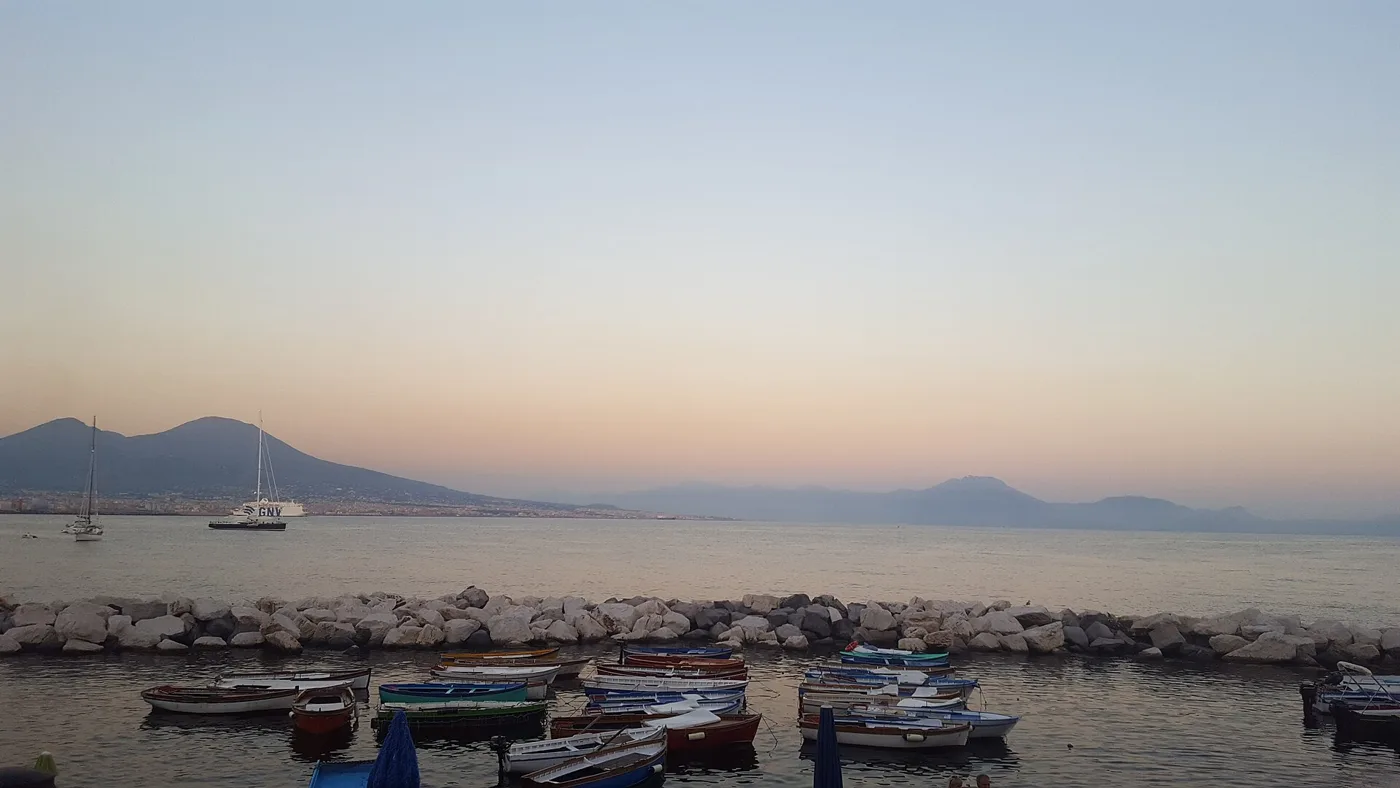
The Lungomare Caracciolo is pedestrianised from Castel dell'Ovo to Mergellina: flat, wide, with Vesuvius on one side and Posillipo on the other. It's the classic Saturday-afternoon and evening stroll. Start at the Borgo Marinari, the little harbour at the foot of the castle, and walk to Mergellina.
Halfway along is the Villa Comunale, the public garden between the Riviera di Chiaia and the sea: benches, trees, room for children to run. If you want to keep going, carry on towards Posillipo, with views of the bay at every bend. At the far end, at Marechiaro, is Gaiola beach: small, free and with limited numbers, booked online. Just offshore are the islet and the underwater park, with Roman ruins a few metres from the shore.
Squares, arcades and churches open to all
Piazza del Plebiscito is the city's largest square and you can cross it for free at any hour: the colonnade of San Francesco di Paola on one side, the façade of the Palazzo Reale with statues of kings in its niches on the other. The palace charges admission; the square doesn't. A hundred metres away is the Galleria Umberto I, the shopping arcade with its glass-and-iron dome: walk straight in and remember to look up.
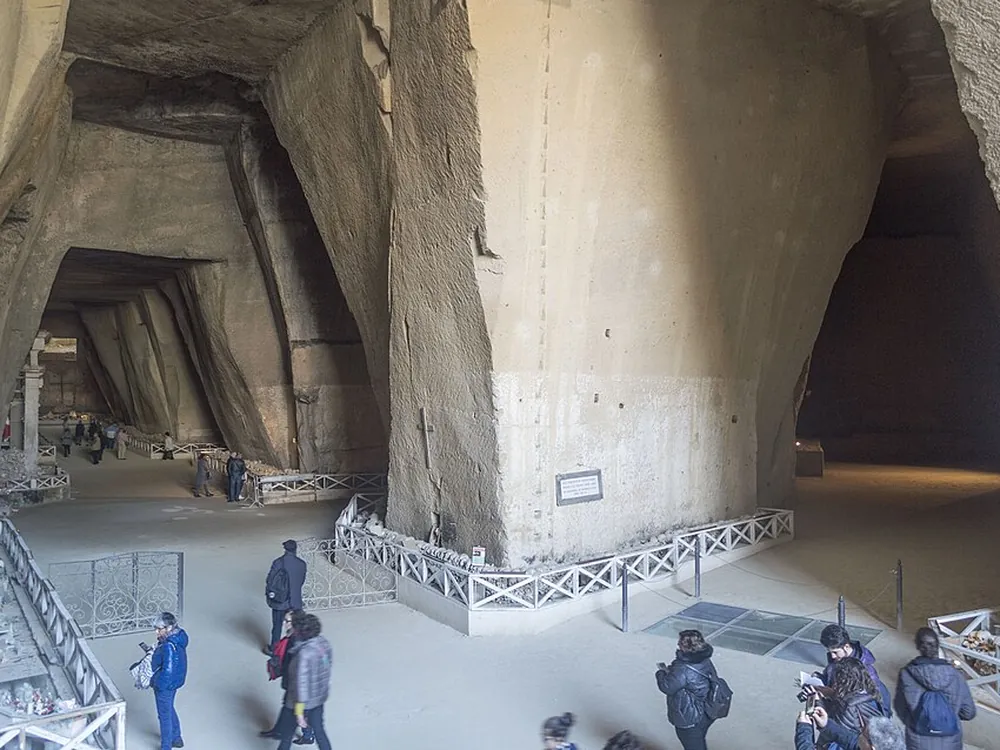
The old-town churches are free to visit, apart from their museum sections. The Gesù Nuovo, Santa Chiara, San Domenico Maggiore, the Duomo: in you go, have a look, out you come. The majolica-tiled cloister of Santa Chiara does charge, as do the Cappella Sansevero with the Veiled Christ, the MANN (the archaeological museum), Capodimonte, Napoli Sotterranea and the Galleria Borbonica. If you have a budget, that's where it should go. But the free churches will fill a whole morning.
The Real Bosco di Capodimonte is a case apart: the museum with Caravaggio and the Farnese collection has a ticket, the park around it doesn't. It's 134 hectares of avenues where Neapolitans go running and have picnics.
Markets and neighbourhood streets
The Pignasecca, behind via Toledo, is the city's oldest street market: fish on ice, fruit stalls, fry shops, delis with that day's mozzarella, vendors shouting prices in dialect. Wander it on your own, for free, in the morning. A tarallo (a crunchy ring-shaped biscuit) and a lemonade cost a few coins.
From via Toledo, climb into the Quartieri Spagnoli, the grid of alleys built in the 16th century to house Spanish troops: washing on the lines, scooters, little shops and, on via Emanuele De Deo, the giant Maradona mural, which always has a crowd in front of it. Thirty years ago it was off limits; today you can wander it calmly by day, eyes turned upwards.
Other streets worth a walk that cost nothing:
- The Rione Sanità, below the bridge, with its Baroque palazzi and memories of Totò, the great Neapolitan comic actor: for decades locals avoided it, and today it's one of the liveliest parts of the city.
- The Borgo Marinari at sunset, sitting on the rocks below Castel dell'Ovo.
Free events coming up
Every week there are neighbourhood festivals, open-air concerts, guided walks and special free openings. The trick is hearing about them in time. In our listings, free events are marked «Free» next to the title, and the listings are updated every morning: the weekend events page is the place to plan, and what to do today is for last-minute decisions.
A few examples from the time of writing, September 2026. Vespero Napoletano, the city council's slow-tourism festival, brings walks, workshops and concerts to the neighbourhoods every weekend until 24 October, free while places last. Giro Giro Napoli offers free guided tours and children's workshops in museums every Saturday morning until 19 December. On 19 September, the feast of San Gennaro, the Duomo is open to everyone for the miracle of the blood: get there early, it fills up from the morning. The dates change, the method doesn't: check the listings and book where needed.
Free with children
With children, free things often work better than paid ones: no stress about a wasted ticket. The seafront with the Villa Comunale is the easiest: they run, you watch the boats, you turn back when everyone's tired. San Gregorio Armeno with its miniature nativity scenes holds small children's attention for an hour. The Bosco di Capodimonte has big lawns and no cars.
Children like the San Martino viewpoint too, especially if you go up by funicular. And the listings include free Saturday-morning tours designed for families. We've written a separate guide on things to do in Naples with kids, covering the paid activities that are really worth it and the ones to skip.
When it's worth paying
Let's be honest: some things in Naples make more sense with €10 or €20 in hand. Not the big museums, which deserve an article of their own, but the small places where a guide changes what you see. Four suggestions, all under €25.
The four spends we recommend after a day of free wandering:
- The Veiled Christ with a guide, €15 with ticket and licensed guide, 45 minutes: Sanmartino's statue and the anatomical machines, without the queue that eats an afternoon if you haven't booked.
- The Petraio and the hidden steps, €19.50 with funicular and local guide, 2 hours: you can do the steps for free, but with someone from the neighbourhood you take the right ones and see how the city fits together.
- Six stops at the Pignasecca, €25 with six tastings, 2 hours: you can walk the market for free, but with someone who knows the stallholders by name you actually get to taste everything.
Almost all activities can be cancelled free of charge up to 24 hours before; prices are our partner platforms' current ones.
Where to start
Free Naples is a city you walk: from the old town to the Vomero steps, from the Plebiscito to the sea. What changes every day are the events and special openings, and for those there are the listings. Start from the things to do in Naples page, where you'll find today's and this weekend's events with «Free» next to the ones that cost nothing, and the experiences sorted by price for when you decide to spend.
- free
- old town
- seafront
- viewpoints
- families
- events

Who wrote this
Gianluca Scanni
Founder @ Cose Fighe