Things to do in Naples when it rains: the city underground, the right museums, a pizza workshop. Indoor ideas with how long they take and what they cost.
It doesn't rain often in Naples, but when it does, it means it: half an hour of water pouring down the alleys like a river, and then the sun often comes back out. Planning your day around the forecast is pointless. What makes sense is having a list of indoor things ready to pull out the moment the sky closes in.
The good news is that Naples has a second city beneath and inside the first: tufa tunnels, cisterns, catacombs, air-raid shelters, churches, covered arcades, huge museums. Almost everything worth seeing doesn't depend on the weather. Below are ideas grouped by type, with duration and price for the activities you can book with us, plus a list of things to skip.
Underground: the Naples that stays dry
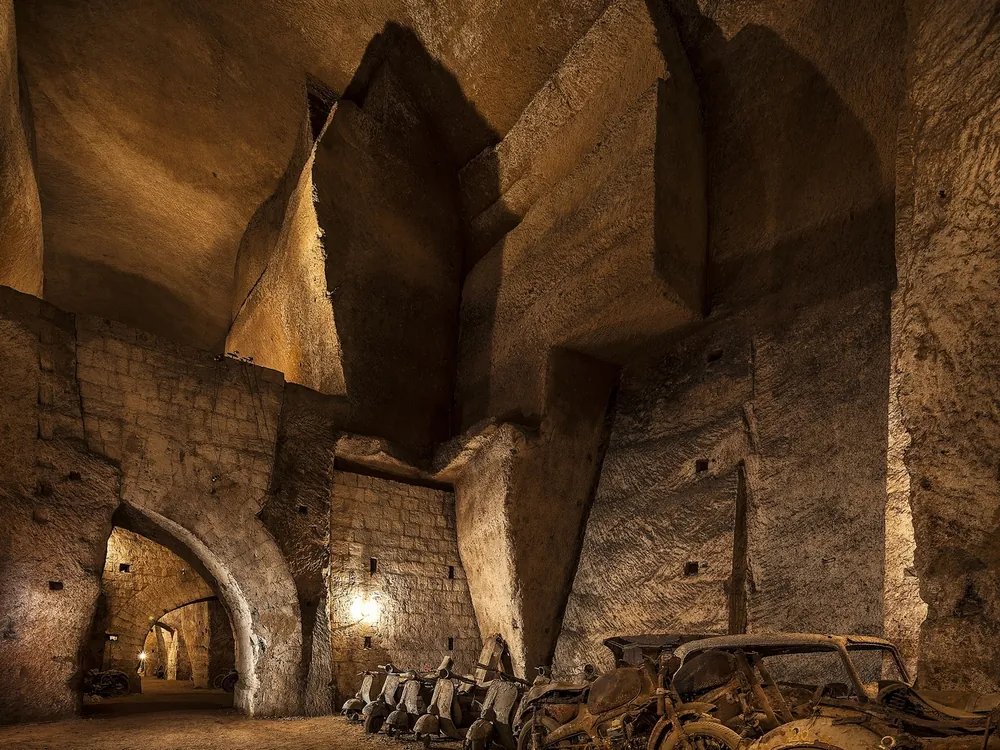
The Galleria Borbonica (Bourbon Tunnel), beneath Chiaia, is the place to start. Ferdinand II had it dug in 1853 to link the Royal Palace to the barracks in case of revolt. It was never finished: it became an air-raid shelter, then a police impound, and the seized vintage cars and motorbikes are still down there, covered in dust, next to the writing Neapolitans left on the walls during the bombings. An hour underground that tells you more about the city than plenty of museums. Guided tours only.
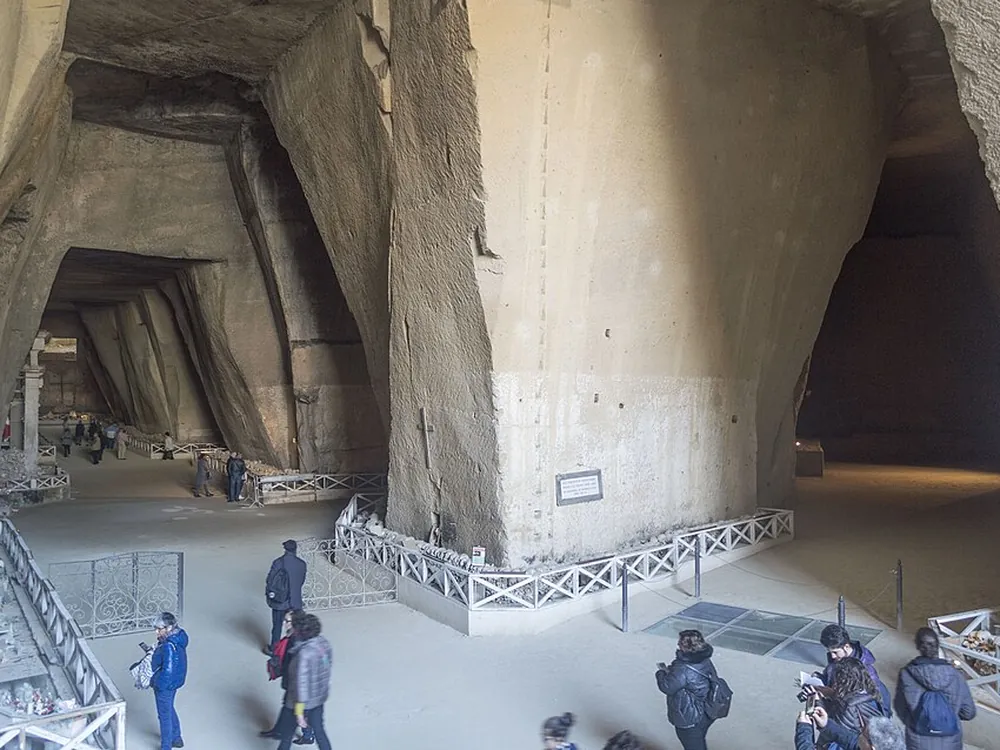
Napoli Sotterranea is the other classic descent: forty metres down, into the tufa quarries the Greeks opened to build the city, later used as an aqueduct and, during the war, as a shelter. In places you squeeze through narrow passages by candlelight, so if tight spaces bother you, know that before you go. This one is also guided and lasts about an hour.
In the Rione Sanità, below the Capodimonte hill, are the Catacombs of San Gennaro: two levels of galleries dug into the tufa from the 2nd century, with early Christian frescoes and the first tomb of the city's patron saint. They're run by a cooperative of young people from the neighbourhood. The ticket also covers the Catacombs of San Gaudioso, under the Basilica della Sanità: one ticket fills a morning, and the two are a few minutes' walk apart, umbrella in hand.
Also in the Sanità, at the far end of the neighbourhood, is the Cimitero delle Fontanelle: a tufa quarry holding tens of thousands of skulls and bones, piled up after the plagues and the 19th-century cholera. For a century Neapolitans 'adopted' a skull, one of the anime pezzentelle (the poor, forgotten souls), asking for favours in return; the Church banned the cult in 1969, but you still see lottery tickets tucked next to the skulls. It isn't macabre: it's quiet and cool.
The right museums for a rainy day
The Museo Archeologico Nazionale (MANN) is where three hours go by without you noticing: the mosaics from the House of the Faun, the frescoes from Pompeii, the bronzes from the Villa of the Papyri, the Farnese Bull and the Farnese Hercules. It's enormous, and on your own you tend to leave tired, with the feeling you missed the best bits. Of the guided museum visits we offer, the MANN with an archaeologist is the one that pays off most: two hours and you come out knowing what you've seen.
The Cappella Sansevero, with Giuseppe Sanmartino's Veiled Christ (1753) and the anatomical machines in the crypt, is small and very crowded. In the rain the problem is the queue outside: book your ticket in advance, or you'll spend half the afternoon getting wet on the pavement. You're inside for about half an hour, so pair it with something else nearby.
Capodimonte is the choice if you have a whole day. The palace on the hill houses the Farnese collection: Titian, Raphael, Masaccio, the Bruegels, and Caravaggio's Flagellation, painted in Naples in 1607. It's big and a long way from the centre: leave the Real Bosco (the royal park) for another time and spend half a day inside.
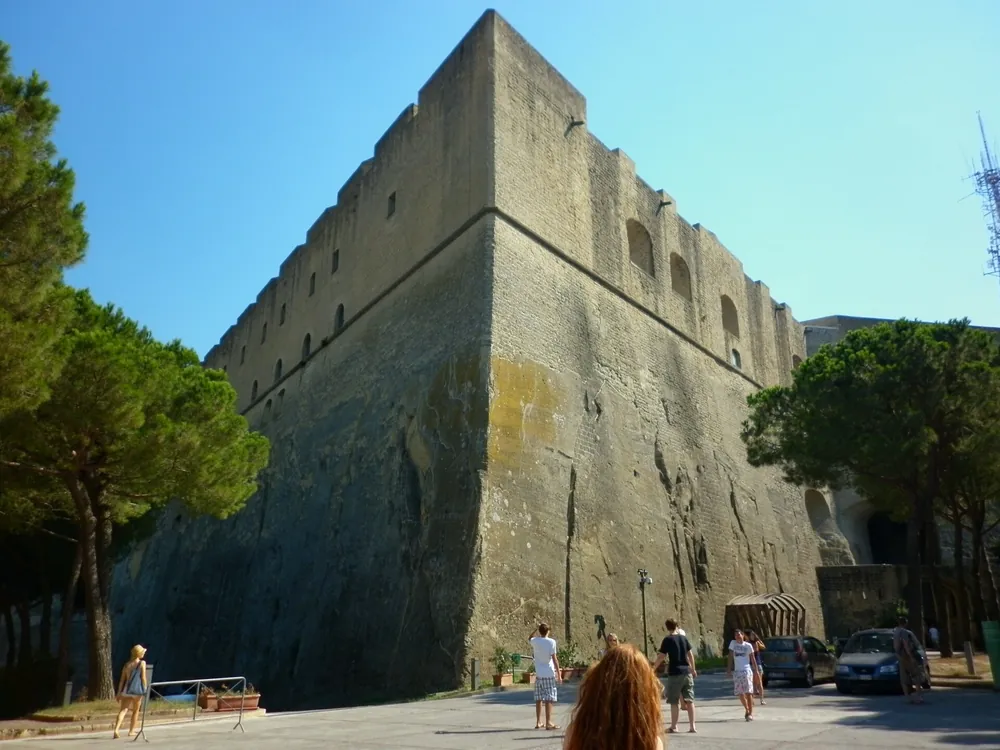
The Certosa di San Martino, up in the Vomero, is reached by funicular from Montesanto, so you're under cover almost all the way. The viewpoint is useless with low cloud, but the Certosa is the best part anyway: the great cloister with marble skulls on the balustrade, the baroque church, the nativity scenes including the Cuciniello crib. Castel Sant'Elmo next door has an open terrace: save it for a sunny day.
Hands-on: pizza and pasta
A pizza workshop takes two or three hours, indoors, and ends at the table with what you've made. Dough from flour, water, salt and very little yeast, stretched by hand with no rolling pin, then sixty seconds in a 450°C oven: you take the stretching technique home with you, along with the tiramisù made in the meantime. It's the most booked experience in Naples, and when it rains it's the first to sell out.
Fresh pasta is the alternative: ravioli, fettuccine, gnocchi, flour and eggs on the table, two sauces, a glass of wine, and at the end everyone eats together. The €20 versions are among the cheapest and most successful things in the city. In the workshops section you'll find every variation, with duration and price; some even include luggage storage, handy on departure day when it's raining and your suitcase is a problem.
Covered arcades and passages
Naples has two 19th-century arcades where you can stay dry for free. The Galleria Umberto I, between Via Toledo and the Teatro San Carlo, has a glass-and-iron dome and the signs of the zodiac on the floor: you can walk through it in five minutes, but in the rain it's where Neapolitans wait for it to stop. The Galleria Principe di Napoli, opposite the Archaeological Museum, is smaller and quieter, and in the evening hosts concerts of Neapolitan song with no microphones: an hour after dinner, for the price of a pizza.
Then there are the 'art stations' of metro line 1. Toledo, with its light well and blue mosaics, is the most famous, but you can do the whole tour without going outside: get off at Toledo, pass through Università and Municipio, and come up at Museo for the MANN. A museum spread across the city, under cover, for the price of a metro ticket.
Eating for hours
A tasting tour of the historic centre lasts two and a half hours: six or seven stops at the right shops for pizza a portafoglio (a small pizza folded in four and eaten on the go), frittatina di pasta (a fried pasta patty), pizza fritta, sfogliatella (the shell-shaped pastry filled with ricotta and semolina) and babà. You walk a few minutes between stops and spend the rest of the time at the counter. Go on an empty stomach and don't book dinner. The options are in the food section.
If you just want to sit down, go for lunch at a winery on the slopes of Vesuvius: minibus from Naples, a walk among the Lacryma Christi vines, then a meal of what the estate produces. It's four hours and most of it is spent at the table. If you're staying in the centre, there's the classic Neapolitan way to kill time: a warm sfogliatella and a coffee standing at the bar, while you wait for it to pass.
With children in the rain
With younger kids, anything where they get to do something works. The pizza workshop is the obvious choice: they get their hands dirty, eat what they've made, and three hours fly by. The Galleria Borbonica, with its vintage cars in the dust, wins over even those with zero interest in the Bourbons. The underground sites are fine for kids who aren't afraid of the dark; for the Fontanelle, judge by their age. At the MANN the mosaics hold their attention better than you'd think, but go with a guide. Our family guide has more ideas, with duration and group size.
What to avoid when it rains
These are things you do in Naples when the sun's out; in the rain they're time wasted:
- Viewpoints: San Martino, Castel Sant'Elmo, Posillipo. With low cloud you can't see the bay, and the view was the only reason to go up.
- Vesuvius: the path to the crater is gravel, it's windy at the top, and with cloud on the rim you see nothing. In bad weather organised trips can be cancelled.
- Boats: trips round the bay are cancelled when the sea is rough, and anyway the whole point was the sun on Posillipo.
- Walking Spaccanapoli: the alleys flood quickly and the wet basoli (the old lava paving stones) are slippery. If you must, hop in and out of the churches.
- The Petraio and Pedamentina steps: 414 wet steps are no stroll.
- Cycling: the pedestrian seafront with the rain coming in sideways is nobody's idea of fun.
What to book for a rainy day
Five things from our catalogue that don't care about the weather, with duration and price per person.
Galleria Borbonica: cisterns, shelters and vintage cars, 1 hour, €15. Groups of up to eight, guide in Italian or English. The cheapest and most rewarding thing on this list.
The MANN with an archaeologist: Farnese, Pompeii and Herculaneum, 2 hours, €44. Priority entry and an archaeologist: the two hours in which the city's biggest museum stops being a maze.
Catacombs of San Gaudioso, beneath the Basilica della Sanità, 45 minutes, €13. Guide and entry; the ticket also covers San Gennaro, so you get the whole of the Sanità.
Pizza nel ruoto and tiramisù, the way it's made at home, 2½ hours, €30. Pizza nel ruoto is baked in a round tin, as Neapolitans do at home. Groups of up to fifteen, recipe booklet and luggage storage: the one to pick if it rains on the day you leave.
Fresh pasta and tiramisù with a welcome glass, for €20, 3 hours, €20. Prosecco, a starter, a diploma at the end and three hours under cover: the best ratio of time filled to money spent.
If it's raining today
Our things to do in Naples today page is updated every morning: exhibitions, concerts, special openings, with times, venue and price checked at the source. In the rain it's the most useful page we have: there's almost always a hall, a theatre or a museum on the listings where you can wait it out.
- things to do in naples when it rains
- naples in the rain
- indoor naples
- naples museums
- naples underground
- pizza workshops

Who wrote this
Gianluca Scanni
Founder @ Cose Fighe